🧠 Weekly MindSweep No. 231 | Manage Your Mind | Visibility
June 2026
Week 229 | Curated Conversation | Visibility
Week 230 | Mind Your Business | Visibility
*Week 231 | Manage Your Mind | Visibility
Week 232 | What’s On My Mind | Visibility
Week 233 | Curator’s Perspective | Visibility
New to the Weekly MindSweep? Past issues live here.
Let’s Sweep The Brain!
🎬 Rather watch or listen instead of read? Now you can!
Subscribe to YouTube @chickbookcreative
In the MindSweep this week:
Weekly MindSweep: Past issues live here.
Jamie’s Second Brain Corner: Links to references & MindSweep Mapping
What’s Inspiring Me - Chopin in Kentucky by Elizabeth Heichelbech
My face and a link to schedule your free consultation.
The Gap Between Your Brilliant Idea and Sharing It
The Neuroscience Behind Why Visibility Hits the Brakes
I am an idea person.
There. I said it.
My brain is not a quiet place. It's a generator factory. A full-production studio running twenty-four hours a day, seven days a week, with no holidays and no off switch.
When I'm in a regulated state, and my body feels safe, and my mind has room to breathe, the ideas come easily. They arrive fully formed. They whisper sweet nothings about lives changed, revenue projections, and a world that will never quite be the same.
This particular idea? It's going to be different.
I can already do the math. I can feel it.
The dopamine rush of idea generation is something I won't try to talk you out of loving, because I love it too. Rainbows fill the sky; unicorns roam the backyard. It’s a vivid, electric state of mind. For those of us with creative, ADHD brains, it’s authentic and absolutely real.
And then.
Then comes the moment you have to take that well-thought-out, inspiring, brilliant idea out of your head and into the reality of 2026 Creative Entrepreneurship America.
The creative train, choo-chooing its way toward the cliff.
The brakes screech so loud the unicorns scatter. The rainbow-filled skies turn dark, the math stops mathing, and the excitement curdles into something that feels a lot more like dread.
In my research into this very specific and personal experience, I found something that made me groan out loud.
It's normal.
Ugh.
A creative’s worst nightmare.
This kind of normal feels like a pat on the head when what you really wanted was an answer.
For those of us who spent years being told we were too much, too different, too anything, "normal" rarely feels like good news.
But this kind of normal is different. This one comes with a map. And unlike every system that was built for a brain that isn't ours, this map was made for exactly how we think.
So let's take a look at it.
Visibility begins in the body, not the mind.
Before you ever decide to post, pitch, or put yourself out there, your nervous system has already voted.
This is not a metaphor. It is biology.
Dr. Stephen Porges developed a concept called neuroception — the process by which your nervous system scans the environment for cues of safety or danger, entirely below your conscious awareness.
Your body is constantly asking: Is this safe? Or is this a threat?
When you feel the creative train hit the brakes, that is your nervous system answering the question. And no, it does not consult you first.
When your nervous system detects safety, it releases its grip. It opens to connection, to expression, to being fully seen. When it detects a threat, even a perceived one, it mobilizes defenses because, as humans, we are wired to survive.
Visibility triggers a threat response every time, until it learns it doesn't have to.
The work isn't forcing yourself through the abrupt brakes.
The work is teaching your nervous system that being seen is safe.
The fear of being seen hurts. Literally.
Research using fMRI brain imaging has found that social exclusion and rejection activate the same brain regions as physical pain — specifically, the dorsal anterior cingulate cortex and the anterior insula. The same areas that light up when you stub your toe light up when you feel overlooked, dismissed, or rejected.
Your brain does not distinguish between physical and social hurt.
Which means the fear of putting your work into the world and having it met with silence, criticism, or indifference? That fear is not dramatic or oversensitive. It is your brain doing its very accurate math.
The dark clouds that roll in when the creative train hits the brakes are not imaginary. They are your brain forecasting pain based on everything it already knows about what it feels like to be unseen.
If you have ADHD, you're paying an extra visibility tax.
This one is specifically for my people.
Dr. William Dodson identified a pattern he called Rejection Sensitive Dysphoria (RSD). RSD is not a formal DSM-5 diagnosis, but it is a clinically recognized term for a well-documented and very real experience. And, it is disproportionately common in people with ADHD.
RSD is extreme emotional sensitivity and pain triggered by the perception of rejection or criticism. Not actual rejection. Perceived rejection.
That distinction matters enormously for creative humans.
For ADHD entrepreneurs, the moment an idea has to leave the safety of your own head and enter the world is the moment RSD starts running scenarios.
What if they don't get it?
What if no one responds?
What if I built the whole math of revenue generation in my head for this offer’s success, and it turns out I was the only one who cared?
The ADHD brain cannot regulate rejection-related emotions the way a neurotypical brain does. Which means those feelings arrive faster, hit harder, and stay longer. A single negative comment can spiral for hours. A post met with silence can feel like confirmation of your worst fears.
The creative train doesn't hit the brakes randomly. It hits the brakes because RSD is already at the station, and it's been there a while.
This isn't just about today's idea.
The dark clouds that follow your creative train are not only about this pitch, or this post, or this brilliant idea that was going to changeeverything.
They're carrying weather patterns from much further back.
Research on ADHD and shame tells us that for many people, there is a lifetime of accumulated evidence that their way of being in the world was wrong. They may have been told they are too loud, too much, too distracted, too talkative (just me?), or too different. Schools, workplaces, and society often send the message that how you function is a problem.
When you step into visibility as a creative entrepreneur, all of that history is in the room with you.
The shame isn't just about whether this idea will land. It's about every time before when it didn't. Every time someone looked at you sideways. Every system that was built for a brain that isn't yours.
This is not a reason to stay invisible.
This is a reason to be extraordinarily compassionate with yourself when visibility feels hard.
Because it was made hard by a world that wasn't designed for how you think.
Safety first isn't a cliché. It's a neurological requirement.
Research on ADHD and disclosure — the decision of whether and when to share who you are — found that people with ADHD who feel psychologically safe are more likely to open up. Those who are more aware of stigma and more attuned to how they might be judged will hold back.
The same principle applies to visibility in your business.
You don't build confidence and then show up. Safety comes first; then your nervous system releases its grip.
The unicorns come back when you feel safe.
Which means the goal isn't to push yourself through the fear. The goal is to build the conditions for safety first. To create relationships, communities, and spaces where your nervous system can genuinely register:
This is okay. I am okay. It is safe to be seen here.
What you experience is not a weakness; it’s the science of how human beings actually work.
Awareness is the first move. It always is. But awareness without action is just a really interesting thought you had last Tuesday. So here's where we take what the science gave us and do something with it, one small step at a time.
5 Small Steps to Take With This New Awareness
Here are five to try.
1. Name the shift when it happens. The next time you feel your creativity slow down, pause and say it out loud or write it down: My nervous system just shifted. Labeling the feeling helps create space between your reaction and your next step. Neuroscientists call this "affect labeling." It works.
2. Regulate before you create content. Before sitting down to write a post, record a video, or send a pitch, do something that signals safety to your body first. A short walk. Three slow exhales. A song that makes you feel like yourself. Your body cannot be in creative flow and threat response at the same time. Prime it for safety before you ask it to be seen.
3. Practice being visible where you already feel safe. Start with your most trusted audience, like our Chickbook Creative community, your close friends, or even just one person you trust. Visibility is a skill, and it’s best to build it in supportive environments first. Trying to start with strangers is like running a marathon without training first.
4. Ask yourself: whose dark clouds are these? When the anxiety arrives, get curious. Is this about today's idea? Or is this older? You don't have to excavate your entire history. Just asking the question creates a crack of light. Old clouds can't be cleared the same way today's can, and knowing the difference is the beginning of something important.
5. Shrink the step, not the dream. Slow the creative train just enough for safety. What's the smallest visible action you can take? Write one sentence, one reply, offer one honest moment. Small visibility builds the safety your nervous system needs to keep going.
The Brakes Are a Gift Too
I still love the unicorn state.
I am not here to argue you out of the dopamine rush, the math in your head, the certainty that this one is going to change everything. That part of you is not the problem. That part of you is, in fact, one of your greatest gifts.
The creative brain is wired for possibility. The neurodivergent mind sees what others miss. The idea generator is the engine that moves everything forward.
But the brakes?
The brakes are a gift too. They remind you that being seen is important, your work matters, and your past experiences deserve respect. When you honor both your motivation and your hesitation, you can move forward with kindness toward yourself. The creative process isn’t just about moving quickly; it’s also about knowing when to pause, listen to your needs, and continue when you’re ready. By focusing on safety, self-understanding, and your own pace, you can turn visibility into a chance for growth. In this way, both your drive and your caution help you share your ideas in a real and powerful way.
The work isn't choosing between the rainbows and the dark clouds.
The work is learning how to build a nervous system that can hold both. A sense of safety, wide enough to let the creative train keep rolling. A community sturdy enough to be the tracks.
The unicorns don't have to run.
We just have to make it safe for them to stay.
My questions for you this week:
The creative train hits the brakes for all of us differently. Where does yours usually slow down? The idea stage, the sharing stage, or somewhere in between? What does that moment actually feel like in your body?
What does safety look and feel like for you before you share your work? And what's one thing that reliably creates for you?
Reply and share with me!
✨ You Belong Here. I can help.
If reading this felt less like a newsletter and more like a mirror, that is exactly the work we can do together. Mapping the places where your brain is running old patterns, and building new ones that actually fit how you think.
Let's talk about what it looks like to build the safety conditions that let you move. A free 30-minute conversation is a good place to start.
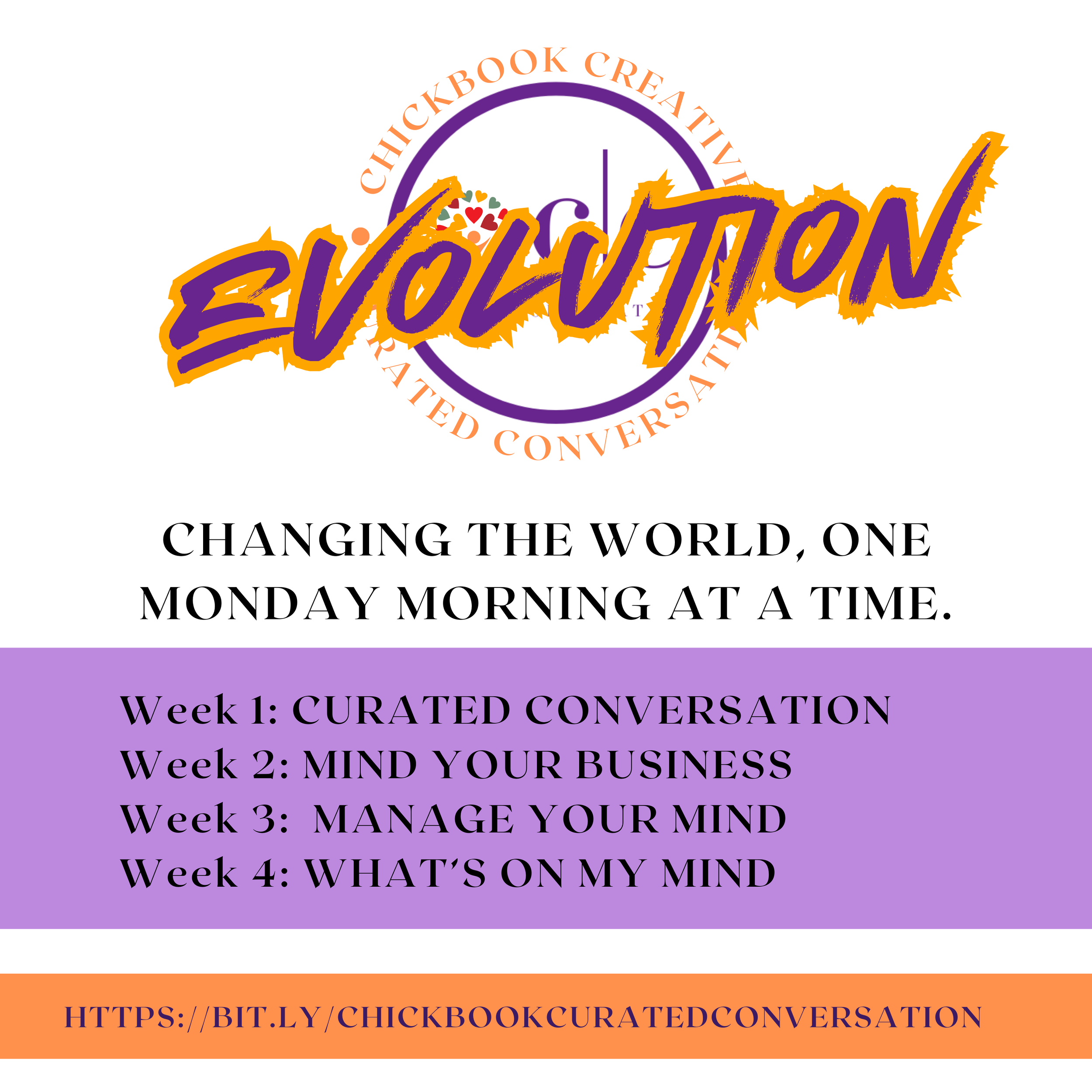
Curated Conversation
You Read It. Now Come Sit In It.
The costume comes off in June. Come as you are.
You don't have to do this alone.
Every Monday at 8am EST, a community of heart centered creative entrepreneurs gather inside Curated Conversation Evolution and do exactly this kind of work — naming what's hard, understanding why, and building the safety to move forward anyway.
If that sounds like the kind of room you've been looking for, come sit with us.
June is our month of Visibility. Your first month is free. Come find out what it feels like to be in the room where it's safe to say the thing out loud.
Listen if you want. Speak if you're ready. Stay if it feels like home.
Mondays at 8 a.m. EST. Start with coffee. Belonging included. 💜
Was this blog forwarded to you? Sign up!

What I’m reading
Chopin In Kentucky
by Elizabeth Heichelbech
A novel about a girl who was too big for the room she was born into.
Sound familiar?
Chopin in Kentucky is the June read for Curated Conversation — and it arrives exactly when it should. Because the gap between creating work that asks others to be seen and allowing yourself to be seen doing it?
That's not just Marie's story. It's yours too.


In other news…
Feeling #FOMO about Curated Conversations? Join us!