🧠 Weekly MindSweep No. 233 | Curator’s Perspective | Visibility
June 2026
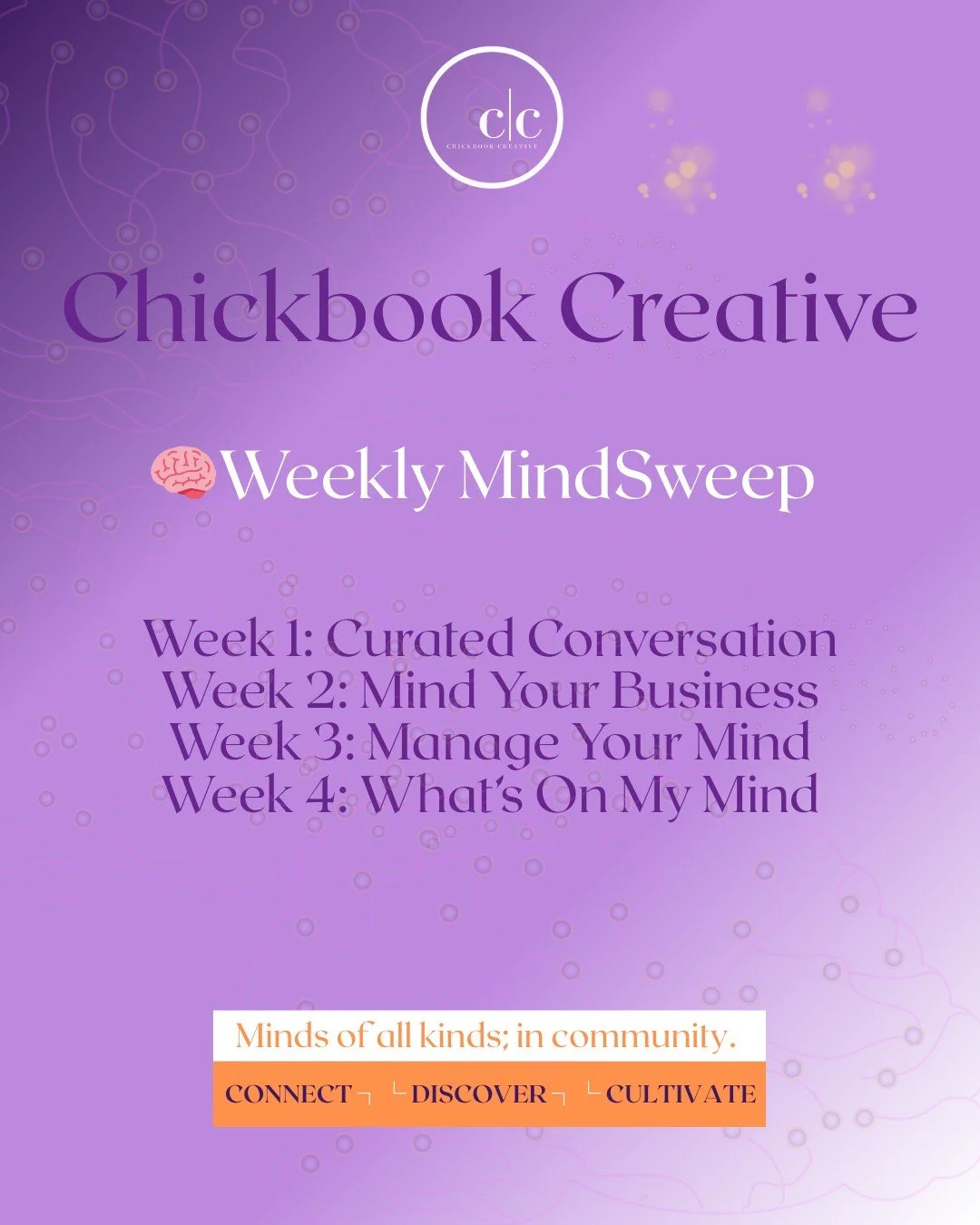
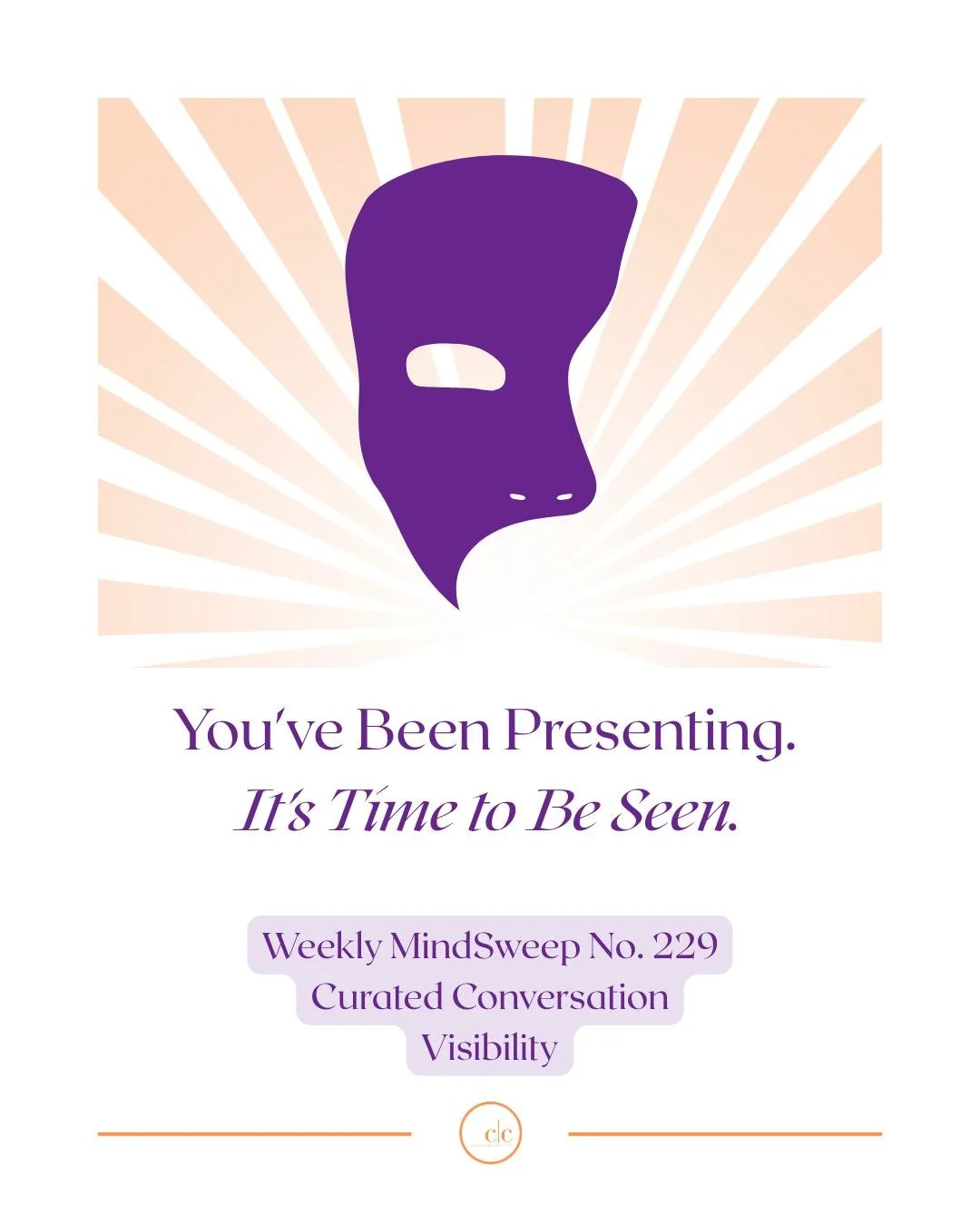
Week 229 | Curated Conversation | Visibility
Week 230 | Mind Your Business | Visibility
Week 231 | Manage Your Mind | Visibility
Week 232 | What’s On My Mind | Visibility
*Week 233 | Curator’s Perspective | Visibility
New to the Weekly MindSweep? Past issues live here.
Let’s Sweep The Brain!
🎬 Rather watch or listen instead of read? Now you can!
Subscribe to YouTube @chickbookcreative
In the MindSweep this week:
Weekly MindSweep: Past issues live here.
Jamie’s Second Brain Corner: Links to references & MindSweep Mapping
What’s Inspiring Me - Chopin in Kentucky by Elizabeth Heichelbech
My face and a link to schedule your free consultation.
🧠 Weekly MindSweep No. 233 | Curator’s Perspective | Visibility
Visibility Needs Tending
What a month of Visibility taught me about the practice that comes next
I was wrong about our next topic.
Last Monday's Curated Conversation uncovered a new place of visibility I hadn't even considered.
I'm so familiar with one phase: brilliant ideas dying in my bookshelf of notebooks. I call this section of my personal library "Brilliant Ideas That Will Make Me Rich!" — the place where, as a creative entrepreneur, I can lick my index finger, stroke the pages, and land back on some brilliance I had years ago, ready to bring it to life again. We've all talked about getting stuck in the gap between brilliance language and business language. That phase is real. Who doesn't love the dopamine hit of idea generation?
I knew there was a second phase, too, because I've watched entrepreneurs build entire businesses around an idea — hire someone for a logo, get high-end photography of themselves "at work," launch a fully built WordPress site with top-tier SEO, bring in a marketing strategist running social campaigns and paid ads — and still sit alone at their desk generating no revenue. They did all the things we're told to do in business without ever testing if they had something the market actually wanted. They had no proof of concept.
What I'd never considered, until Monday, was a third place. The creative entrepreneurs in that conversation didn't have an idea stalling in a notebook. They didn't have it half-built and hiding behind busywork. They had it completely finished — the offer, the launch sequence, the marketing plan, polished to a shine. Except none of it had ever left the safety of their brain or their Google Drive.
They'd built the whole thing and never once brought it into real life.
I'd walked into Monday confident I knew what I was talking about for our next topic. I was about to stand up and tell this community that July is about consistency.
Pfft. I was wrong.
We can't do that. Not yet.
Three Paths, One Missing Step
If you're a creative or neurodivergent entrepreneur, I'd bet you recognized yourself somewhere in those three stories before I even finished describing them.
Maybe you're the notebook person. Ideas show up constantly, the kind that make your chest light up the second they arrive — and then, somewhere between the spark and the structure, they just stop. Not because the idea was bad, but because you never found the business language to carry it the rest of the way.
Maybe you're the builder. You did everything you were told a real business owner does — logo, photography, website, SEO, and a marketing strategist running ads. You were busy. You looked completely legitimate. And you still sat alone at your desk with no revenue, because somewhere in all that doing, you skipped the one step that actually mattered: finding out if anyone wanted to buy the thing.
Or maybe you're the finisher, the version that gets the least sympathy, which is exactly why it deserves more. You built the entire thing — in the shower, on a walk, at 11pm when you should be asleep. The offer, the price, the launch week, the email sequence. It is, in your head, completely finished. And in the actual world, it is completely nonexistent.
These aren't three different problems. They're the same missing piece of visibility, located at a different point in the journey — and none of you is uniquely bad at follow-through. You're exactly as human as everyone else who's ever had a brilliant idea evaporate, or built a beautiful shell around one and called it finished.
Why This Isn't a Discipline Problem — It's a Wiring Problem
If you've ever felt ashamed about how many half-built ideas live in your notebook, or how much money you've spent on a website that never made you a dollar, hear this clearly: your brain is not malfunctioning. It's doing exactly what it evolved to do.
The notebook person runs on dopamine. New ideas are novel, and novelty is chemically irresistible. For ADHD and neurodivergent brains especially, motivation tends to follow what's interesting over what's "supposed to" matter. The next step on an old idea can't compete with the spark of a brand-new one.
The builder runs on ambiguity aversion — a well-documented preference for known risk over unknown risk. (Oh, hi Uncertainty! I see you!) A logo has a knowable process and a knowable outcome. Testing whether people will pay does not. The brain reasonably picks the knowable task; it just happens to be the wrong one to spend a year on.
The finisher runs on threat response. The plan isn't unfinished; it's protected. What's left isn't uncertainty about the offer; it's the moment it would have to meet a stranger who could say no. Finishing it in your head was safe. Finishing it out in the world is not.
Three places, three different reasons for staying invisible — chasing novelty, avoiding ambiguity, protecting against social threat — in a context where none of those instincts happen to serve the goal.
That's a wiring difference, not a character flaw. And wiring can be worked with.
Introducing Tending: The Step Between Stardust and Sharing
So here's what I think we actually need, and it isn't a bigger idea, a more impressive launch, or an even more detailed plan. And, no, it’s not a new notebook.
We need to tend to the idea. The way you tend a garden or the way you might tend to a fire.
Tending isn't any of your usual exits:
Chasing the next shiny idea instead of returning to this one
Building a professional-looking apparatus so you never have to ask the vulnerable question
Perfecting something in private until it finally feels safe to share
It's the exposed, unglamorous middle: showing someone the seedling before you know if it'll survive, feeding the fire one small log at a time before you know if it'll catch. There's no dopamine rush in it, no comforting busyness, no safety in it either — which is exactly why all three of us skip it.
It's the one step that doesn't reward you on the way in. It only pays off after.
We are not meant to perfect things in quiet. We're meant to learn by putting things out into the world and letting them breathe to gain the kind of wisdom that only real-life contact can teach you. That means practicing being visible in the discomfort of uncertainty, instead of deciding in advance what will happen and skipping the step where you'd actually find out.
No More Whisper Launching
And while we're being honest about what gets skipped, let's just talk about whisper launching.
You know the one. You post the thing once, in one place, quietly, almost hoping no one notices, so it can't really fail. And when the response is quiet — because of course it is, you barely told anyone — you take that silence as proof. Proof that the idea wasn't good and that nobody wants it. That's not evidence. That's negativity bias, treating the absence of a response as a definitive no, when it was never actually given the chance to receive a yes.
Your community is right here. Your audience is closer than you think. You already have built-in people in your corner — this exact community, the one reading this right now. Tending doesn't mean shouting into the void and hoping. It means bringing the half-formed thing to the people who have already shown up for you and letting them help it grow.
The Cost of Hiding Your Magic
If you've ever felt like you were "too much" — too many ideas, too much energy, too much enthusiasm for something most people would call small — that feeling can quietly talk you into hiding your magic. And your gifts were never meant to be hidden.
Hiding doesn't always look like silence:
A notebook full of brilliant ideas nobody else will ever see
An impressive website and a busy content calendar that keep you looking occupied enough that no one asks if you've actually tested whether anyone wants what you're selling
A finished, polished plan sitting in a Google Drive folder, fully complete and entirely invisible, because finishing it in private felt safer than finding out what the world would say
All three are hiding. They just wear different costumes.
Notice where you're isolating yourself right when it's actually time to come out and let people see what you're capable of. I see real potential in the people in this community, and I mean that specifically, not as a platitude.
You have a gift for noticing what isn't working and imagining something better in its place. That takes nerve. So notice where you're clinging to "how it's always been done" — staying in the notebook, staying busy, staying polished and private — simply because it's familiar and safe, when the braver, truer thing is the one quietly calling you toward it.
Wisdom Doesn't Come From the Next Idea — It Comes From Pausing on This One
Your wisdom comes from what you've actually lived — the things you were daring enough to try and test for yourself, in the real world, not just in your head. It can only become wisdom once you pull back and actually take it in. New neural pathways work the same way: they're not built through insight alone; they're built through repetition. So the pause and the practice are really the same move, just aimed at three different exits.
The notebook person: The pause is resisting the pull toward the next idea before this one has taught you anything — the lesson was in the unfinished idea, not the shiny new one. The practice is staying. Taking one small action on the idea you already have before you let yourself open a new page.
The builder: The pause is resisting the urge to add one more piece of infrastructure — another funnel, another platform — instead of actually looking at what the market told you the one time you tested it. The practice is interrupting the busywork to do the one ambiguous thing you've been avoiding: putting the actual offer in front of an actual person and asking if they'd buy it.
The finisher: Here, the pause has to run the other way. You've already paused for months inside your own head, refining a plan that's never been tested against a real person's response — pausing only teaches you something if there was an actual experience to pause on first. The practice is leaving the room in your head: giving the plan one small, real-world exposure it's never had — not the full launch, just one honest conversation about it with someone who isn't you.
Every time you choose the small, unglamorous next step instead of chasing novelty, hiding in busyness, or perfecting in private, you're laying down a slightly stronger groove for the next time this exact choice shows up.
The pathway gets easier to find with use, just as a path through tall grass gets clearer every time someone actually walks it rather than just imagining the walk. Not forcing yourself to become a different kind of brain. Just practicing, on purpose, the one small return that turns a wish — or a plan, or a half-built business — into something real enough to learn from.
Join Us in July: Curated Conversation Evolution on Tending
This is exactly why I want you with us in July. Whether you're the notebook person, the builder, or the finisher — and most of us are some shifting combination of all three depending on the week — the invitation is the same: stop waiting for the idea to be safer, and start tending to the one you already have.
We're spending the month of July inside Tending — not the big launch, not the flawless plan, not one more piece of infrastructure. Just the small, repeated, often invisible act of returning to one idea long enough to let it actually grow, and letting another set of eyes on it before it feels ready.
You are not too late. You are right on time. Let’s practice taking the next small step together.
Join us for Curated Conversation Evolution, live every Monday at 8am EST. Your first month is free. Bring the half-formed thing from your notebook, the polished thing in your Drive that's never seen daylight, or the busy thing you built around an idea you've never actually tested.
We'll tend to it together.
My questions for you this week:
Where has "looking busy" ever stood in for actually finding out if something would sell?
When have you whisper-launched something by put it out once, quietly, in one place, and then mistaken the silence that followed for a real no? What would it have looked like to actually ask, instead of assume?
Reply and share with me!
✨ You Belong Here. I can help.
If you know exactly which of these three places you're stuck in but still can't seem to move past it, that's exactly the work I do with creative and neurodivergent entrepreneurs.
I can help you tend the idea instead of abandoning it, over-building around it, or keeping it locked away. Book a free 30-minute consultation, and let's find your next small step together.
Curated Conversation
You Read It. Now Come Sit In It.
The costume comes off in June. Come as you are.
You don't have to do this alone.
Every Monday at 8am EST, a community of heart centered creative entrepreneurs gather inside Curated Conversation Evolution and do exactly this kind of work — naming what's hard, understanding why, and building the safety to move forward anyway.
If that sounds like the kind of room you've been looking for, come sit with us.
June is our month of Visibility. Your first month is free. Come find out what it feels like to be in the room where it's safe to say the thing out loud.
Listen if you want. Speak if you're ready. Stay if it feels like home.
Mondays at 8 a.m. EST. Start with coffee. Belonging included. 💜
Was this blog forwarded to you? Sign up!

What I’m reading
Chopin In Kentucky
by Elizabeth Heichelbech
A novel about a girl who was too big for the room she was born into.
Sound familiar?
Chopin in Kentucky is the June read for Curated Conversation — and it arrives exactly when it should. Because the gap between creating work that asks others to be seen and allowing yourself to be seen doing it?
That's not just Marie's story. It's yours too.




In other news…
Feeling #FOMO about Curated Conversations? Join us!