🧠 Weekly MindSweep No. 236 | Manage Your Mind | Tending
July 2026
Week 234 | Curated Conversation | Tending
Week 235 | Mind Your Business | Tending
*Week 236 | Manage Your Mind | Tending
Week 237 | What’s On My Mind | Tending
New to the Weekly MindSweep? Past issues live here.
Let’s Sweep The Brain!
🎬 Rather watch or listen instead of read? Now you can!
Subscribe to YouTube @chickbookcreative
In the MindSweep this week:
Weekly MindSweep: Past issues live here.
Jamie’s Second Brain Corner: Links to references & MindSweep Mapping
What’s Inspiring Me - Small Pleasures | Author Clare Chambers
My face and a link to schedule your free consultation.
🧠 Weekly MindSweep No. 236 | Manage Your Mind | Tending
The Space Between Forest and Furrow: The Neuroscience of Why Big Ideas Feel Impossible to Start
The idea arrives in your brain complete. You can see the whole retreat, the room full of people, the coffee, the light through the windows, it's so vividly real that you could literally walk into it.
And then you open the new shiny notebook to begin execution of your fully thought-out idea, and the page is blank, and so are you.
There's the vision, glowing in your mind. And then there lies an empty page. And between them, where the first step should be? Nothing at all.
If you're an ADHD or neurodivergent creative entrepreneur, you know this exact silence. And you may have spent years apologizing for it. Internally calling it laziness, shame-pile projects, or lack of follow-through, and proof that you're just not cut out for this.
It's none of those things. It's neuroscience.
And this week, Manage Your Mind week, I want to walk you through what's actually happening inside our brains, because once you can see the mechanism, you can stop blaming the gardener.
Let's go find the missing middle.
Your Brain is Built to See the Harvest, Not the Rows.
Start with the vision itself, because it's vividly real, and it's a strength you possess as a creative human.
The ability to picture a future event is called prospection. Research on ADHD shows that we often struggle to create and hold detailed mental representations of future tasks.¹ We can see the destination with stunning clarity, but the mind has trouble building and keeping the sequence of steps that lead there.
Clinicians describe an ADHD "planning horizon" that runs shorter than average, and many people with ADHD experience time in two settings only: now and not now.¹ The finished retreat lives in "not now," fully imagined but emotionally distant. The boring middle steps live in a fog the brain can barely reach.
So your imagination hands you the harvest, in high definition. It just forgets to include the rows of dirt you'd have to hoe to get there.
That's not a flaw in your dreaming. It's a gap between your vision and your sequencing. And that gap has a name.
The Missing Middle is an Executive Function Challenge.
The skill that turns "big idea" into "step one, step two, step three" is called sequencing, and it lives in your brain's executive function system, run largely by the prefrontal cortex, the part researchers sometimes call the brain's air traffic control.
For ADHD brains, this is precisely the system under strain. Research shows executive function challenges are found in a large majority of people with ADHD,² and sequencing, holding a logical order of steps in mind while carrying it out, sits close to the core of the condition rather than off to the side.²
Read that again: the difficulty breaking a big idea into small steps is not a motivation problem or a discipline problem. It's the exact cognitive skill that ADHD makes harder, operating on the exact kind of task, a big, undefined, creative project, that demands the most of it.
This is why "just break it into smaller steps" is such maddening advice. Telling an ADHD brain to "just break it down" is like telling someone who's lost to "just know where you are."
The not-knowing is the entire condition.
But When We Do Reach the Steps, They're Boring — Which, for our Brains, is a Real Barrier.
Now, suppose you push through, and you do get the idea broken down. You've got your list. Step one: create a landing page. Step two: draft the outline. Step three: email the venue.
And your whole body goes: ugh.
Here's the part that neurotypical productivity advice completely misses. Dr. William Dodson's widely-cited clinical framework describes ADHD brains as running on an interest-based nervous system rather than an importance-based one.³ Most people can summon motivation because a task is important. Our brains largely can't run on importance alone. They run on interest, novelty, challenge, and urgency.
The vision, the finished retreat, is bursting with all four.
It's novel, it's fascinating, it's a challenge, it's your passion. But the individual steps? Creating a landing page is not novel. Drafting an outline is not urgent. The middle steps are, almost by definition, the least stimulating part of the whole endeavor.
So the same brain that lit up like a carnival at the idea goes dark at the to-do list.
Not because you don't care.
Because the steps genuinely don't give your nervous system the fuel it needs to move, and "this matters" isn't enough fuel on its own.
Stack these three together, and you have the entire ADHD entrepreneur's dilemma in one sentence: we see a glorious end we can't sequence, and when we finally sequence it, the steps don't give us the fuel to start.
No wonder we struggle. It's not one gap. It's three, stacked.
Why a Second Brain Changes the Whole Equation
Every one of those three gaps is a gap another brain can fill. Not because you're incapable, but because the research on how our brains work points, almost embarrassingly directly, at other people as the fix.
Think about what a second person actually does when you sit down together with your big messy idea.
They hold the sequence you can't.
Your prefrontal cortex is straining to keep twelve steps in order. Theirs isn't, because it isn't drowning in your idea. They have the working memory to spare that yours, right now, on this project, does not.
You don't have to grow a better executive function. You can borrow one.
This support makes "not now" into "now."
A session on the calendar with a real human is an alarm your time-blind brain will actually hear. The someday retreat becomes a concrete Tuesday appointment at 10am, and suddenly it exists in the only tense your brain acts in: the present.
And they make the boring steps stimulating. This is the quiet magic of body doubling, the simple practice of doing a task in the presence of another person.⁴ It's one of the most widely used tools in the ADHD toolkit, because the other body in the room supplies exactly what the dull middle step is missing: a little novelty, a little challenge, a little accountability, a reason for your interest-based nervous system to switch on. The outline that feels like wet cement alone gets written in twenty minutes when someone's there.
Same task. Same brain. Different conditions.
None of this is a crutch. It's the opposite. It's doing precisely what the neuroscience recommends: when the internal system is strained, externalize it. Borrow the prefrontal cortex. Add the body to the room. Turn importance into interest by making the work shared.
The most capable entrepreneurs I know aren't the ones white-knuckling their big ideas alone at midnight.
They're the ones who stopped trying to be the only brain in the room and reached for support.
One Thing to Try This Week
Last week in Curated Conversation, one of our members shared that she'd been stuck on her big idea. And when we dug into why, it came out: in her mind, the only thing that counted as progress was the very last step.
Clicking "buy" on the finished thing. Until that happened, nothing she did felt real.
But the moment she said it out loud, I could see them. All of them. The dozen quiet, tendable steps that live before anyone ever clicks buy. Steps she could start today. Steps that had been invisible to her and were suddenly, obviously there.
She looked at me and told me, with love, exactly where I could go.
I have never been so honored.
Because that's the sound of the missing middle becoming visible. That's a brain that only saw the harvest, suddenly seeing the rows. It stings a little, that moment of awareness, right before it sets you free.
So here's your step. You don't need permission or even a session to take it.
Take your big idea and, instead of planning it, say it out loud to one person. Share the vision, then add one honest sentence: "I don't know where to start." Let another brain hear it. Notice what they ask. Notice how the steps you couldn't see start to appear, not within your willpower, but within their awareness.
That's tending. Not forcing the harvest. Just letting one more person help you find the first row, and the second, and all the ones that come long before anyone clicks buy.
My questions for you this week:
If you had to name the single boring step standing between you and your idea (the one that makes your whole body go "ugh) what is it?
Whose garden are you tending beautifully right now while your own grows wild? What would it take to give yourself even one hour of what you give them?
Reply and share with me!
✨ You Belong Here. I can help.
Being the second brain for creative, heart-centered entrepreneurs is the work I love the most.
When we sit down together for a MindSweep Mapping Session, we do the exact part your brain finds hardest: we get the whole glorious, overwhelming idea out of your head and onto the map, find the rows hiding between you and the harvest, and land on a first step small enough that your nervous system says yes instead of ugh.
You leave with a path you can actually see. Then, I can support you with your next steps. Learn more at chickbookcreative.com/mind-mapping.
Not sure where to start? Let’s have a conversation first. Book a free 30-minute consultation.
Curated Conversation
You don't have to do this alone.
Every Monday at 8am EST, Curated Conversation Evolution is a room full of creative entrepreneurial brains that get it, and a little built-in body doubling to go with them.
It's where "I don't know where to start" gets said out loud, and where the missing middle starts becoming visible, together.
July is our month on Tending. Your first month is free. Come find out what it feels like to be in the room where it's safe to say the thing out loud.
Listen if you want. Speak if you're ready. Stay if it feels like home.
Mondays at 8 a.m. EST. Start with coffee. Belonging included. 💜
Was this blog forwarded to you? Sign up!
Sources
On seeing the end but not the steps (prospection, time, and the "now / not now" experience). Barkley, R. A. (1997). Attention-deficit/hyperactivity disorder, self-regulation, and time: toward a more comprehensive theory. Journal of Developmental & Behavioral Pediatrics, 18(4), 271–279. Barkley's model describes how ADHD returns behavior to "the temporal now" and predicts difficulty directing behavior toward the future. https://pubmed.ncbi.nlm.nih.gov/9276836/
On difficulty breaking ideas into steps (executive function and sequencing). Hervey, A. S., Epstein, J. N., & Curry, J. F. (2005). Executive functioning in adult ADHD: a meta-analytic review. Psychological Medicine, 35(8), 1097–1108. A meta-analysis documenting executive-function deficits across adults with ADHD. https://doi.org/10.1017/S003329170500499X — See also Barkley on ADHD as fundamentally a disorder of executive function and self-regulation: https://www.russellbarkley.org/factsheets/ADHD_EF_and_SR.pdf
On why the steps feel boring (interest-based nervous system). Dodson, W. — clinical framework describing ADHD motivation as driven by interest, novelty, challenge, and urgency (ICNU / INCUP) rather than importance. A widely cited clinical observation aligned with dopamine research, not a peer-reviewed brain classification. Overview: https://neurodivergentinsights.com/interest-based-nervous-system/
On working alongside another person (body doubling). CHADD, "Could a Body Double Help You Increase Your Productivity?" https://chadd.org/adhd-news/adhd-news-adults/adhd-weekly-could-a-body-double-help-you-increase-your-productivity/ — and ADDA, "The ADHD Body Double." https://add.org/the-body-double/ Both describe body doubling as a widely used focus and accountability tool; both note it is supported primarily by lived experience rather than controlled research.

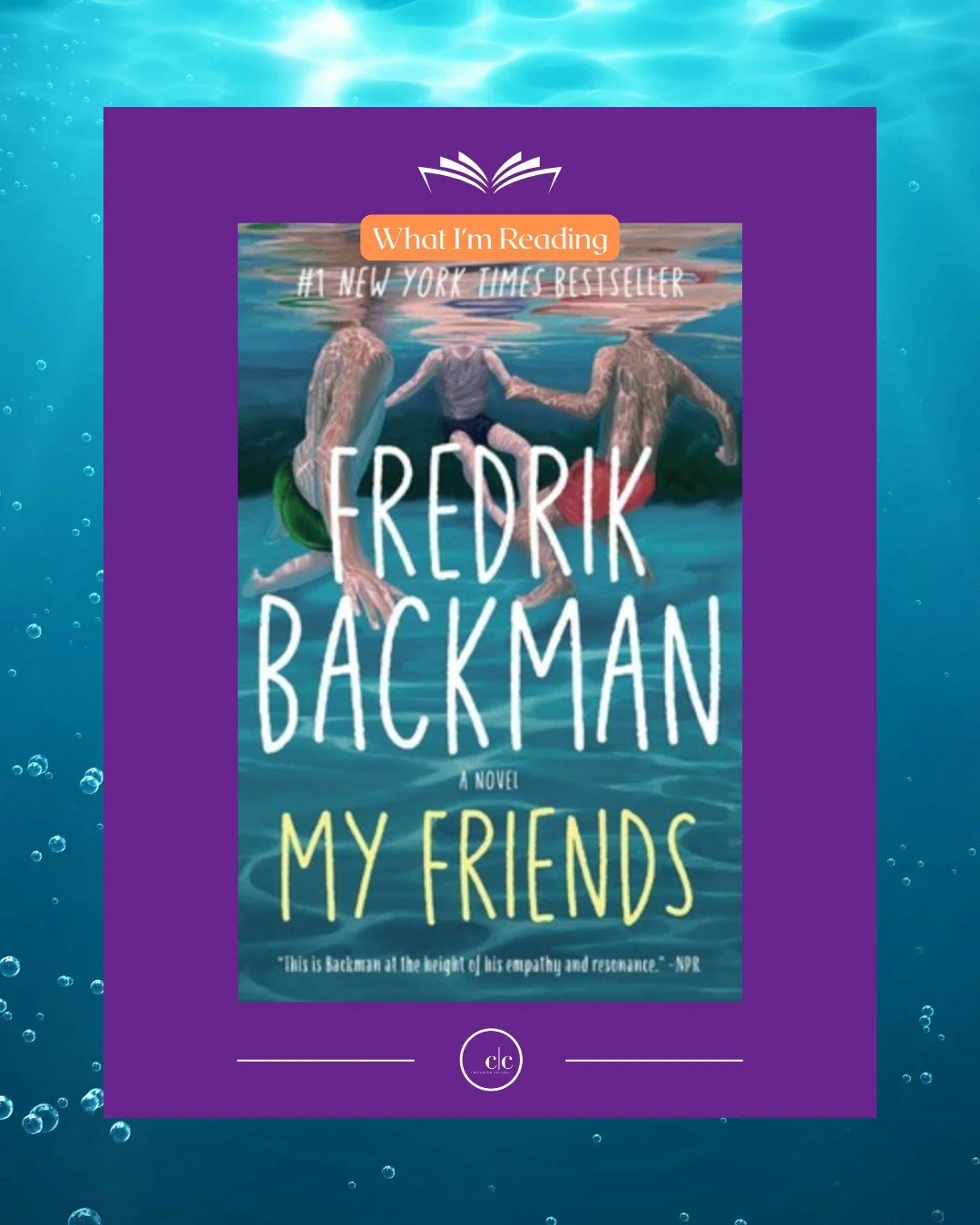
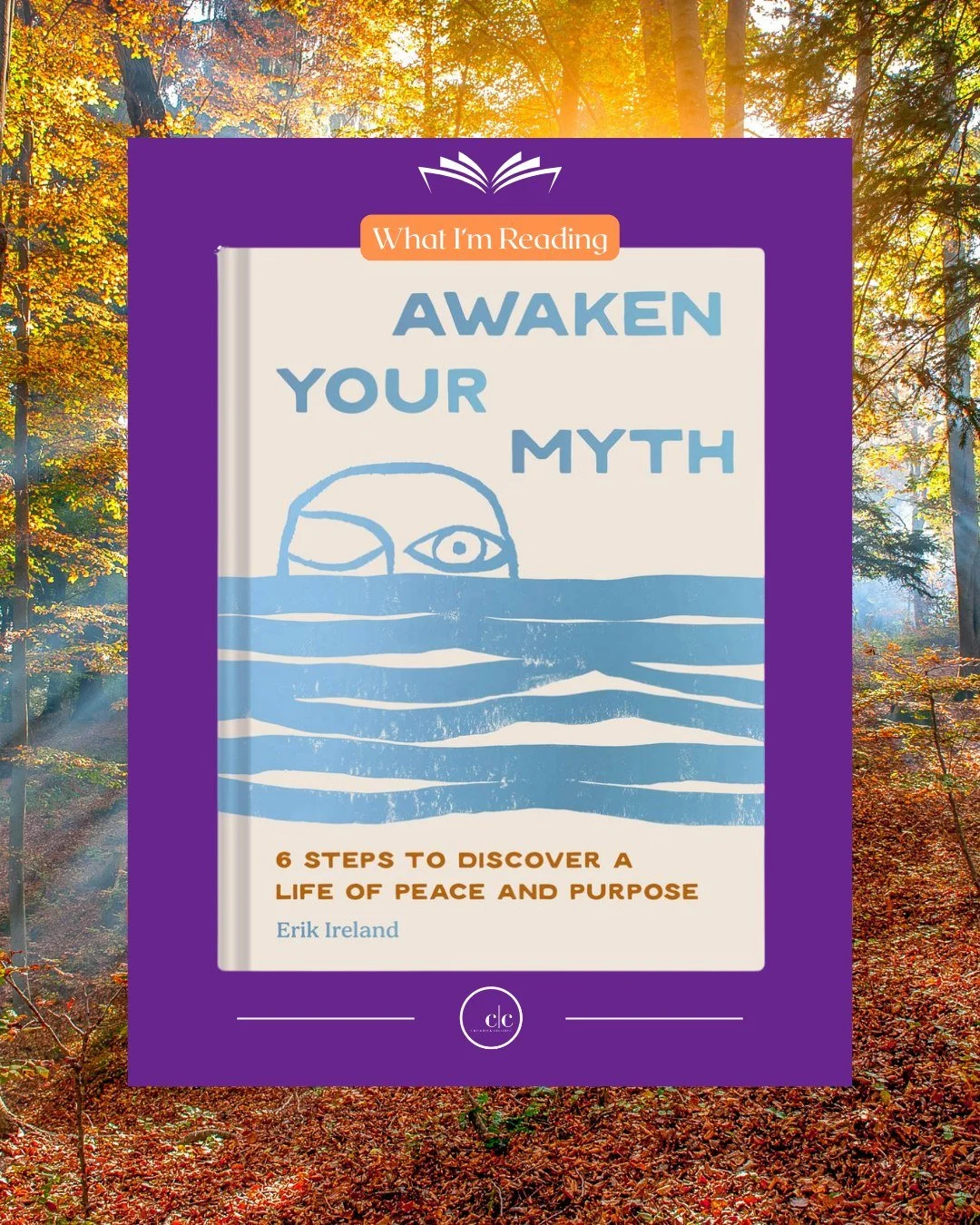
What I’m reading
Small Pleasures
by Clare Chambers
I found Clare Chambers the way I find most of my favorite books now — someone else loved something first.
Kate Hollis sent me Shy Creatures, and I fell so hard for how Chambers writes people — the quiet, specific, almost too-true details of how humans actually behave — that I went looking for the rest of her shelf. That's how I landed on Small Pleasures.
What’s inspiring me? Caring for the people we love was never supposed to come at the cost of caring for ourselves.



In other news…
Feeling #FOMO about Curated Conversations? Join us!