🧠 Weekly MindSweep No. 238 | Curated Conversation | Interdependence
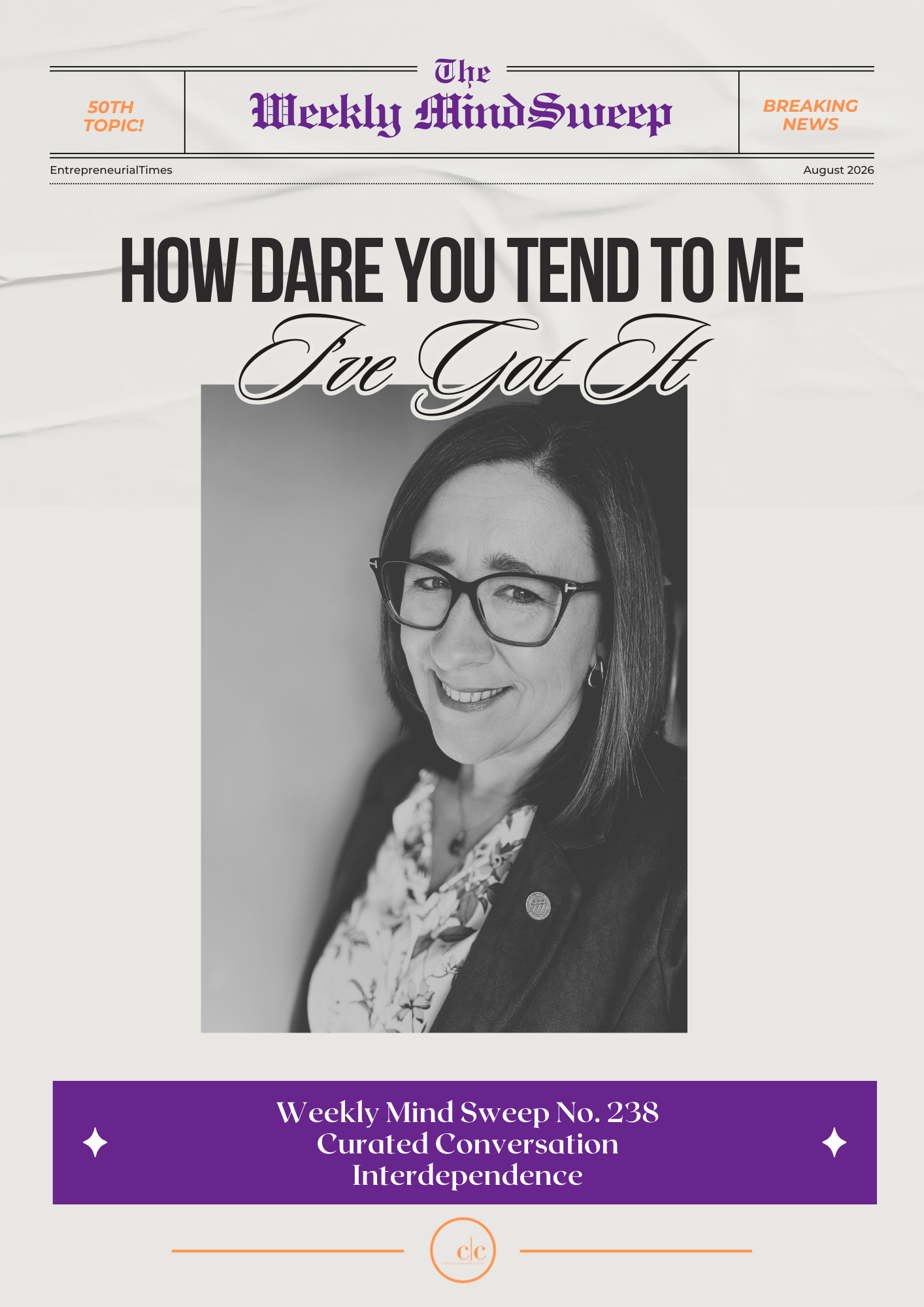
August 2026
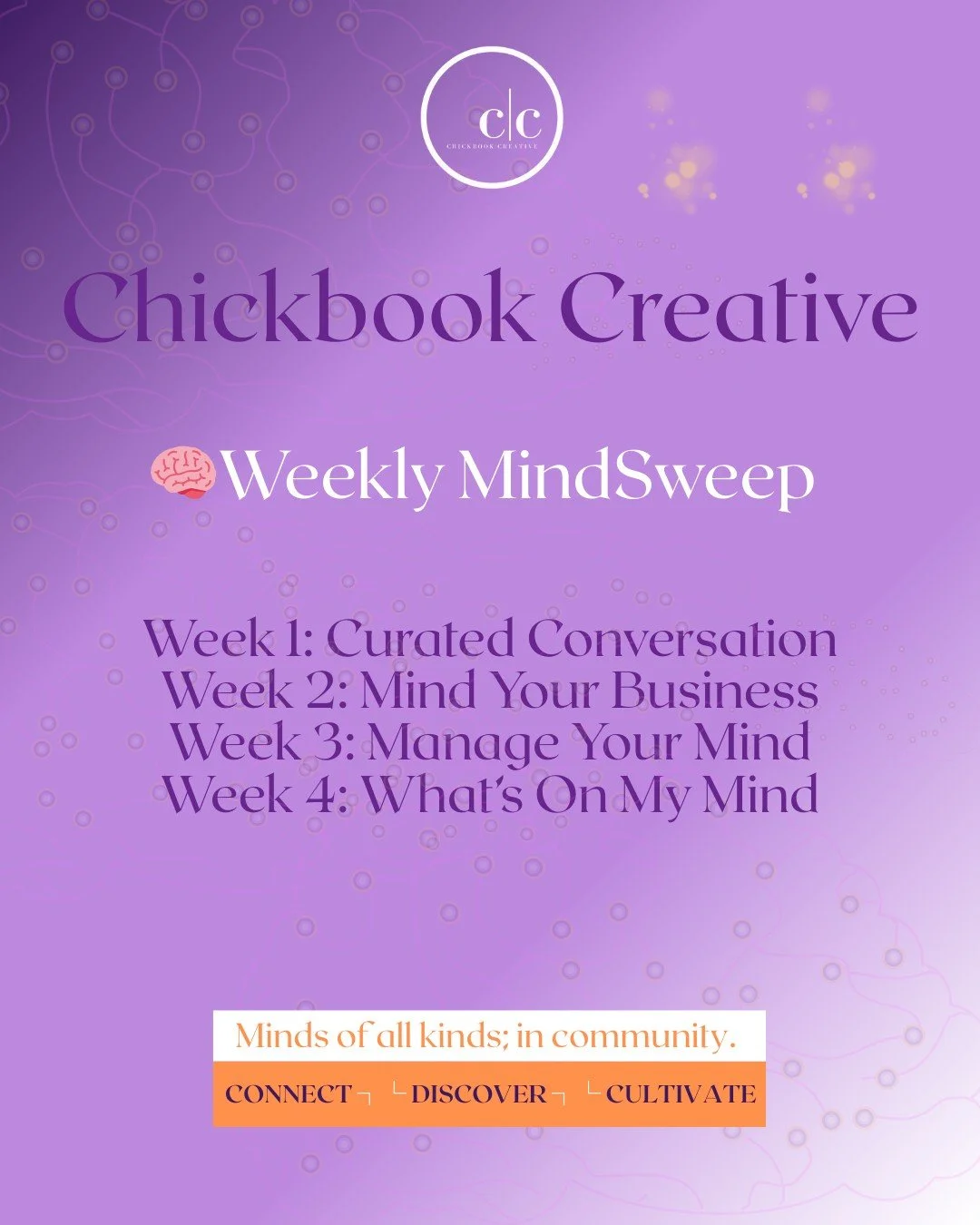
*Week 238 | Curated Conversation | Interdependence
Week 239 | Mind Your Business | Interdependence
Week 240 | Manage Your Mind | Interdependence
Week 241 | What’s On My Mind | Interdependence
New to the Weekly MindSweep? Past issues live here.
Let’s Sweep The Brain!
🎬 Rather watch or listen instead of read? Now you can!
Subscribe to YouTube @chickbookcreative
In the MindSweep this week:
Weekly MindSweep: Past issues live here.
Curated Conversation: Join our community; Mondays at 8am EST
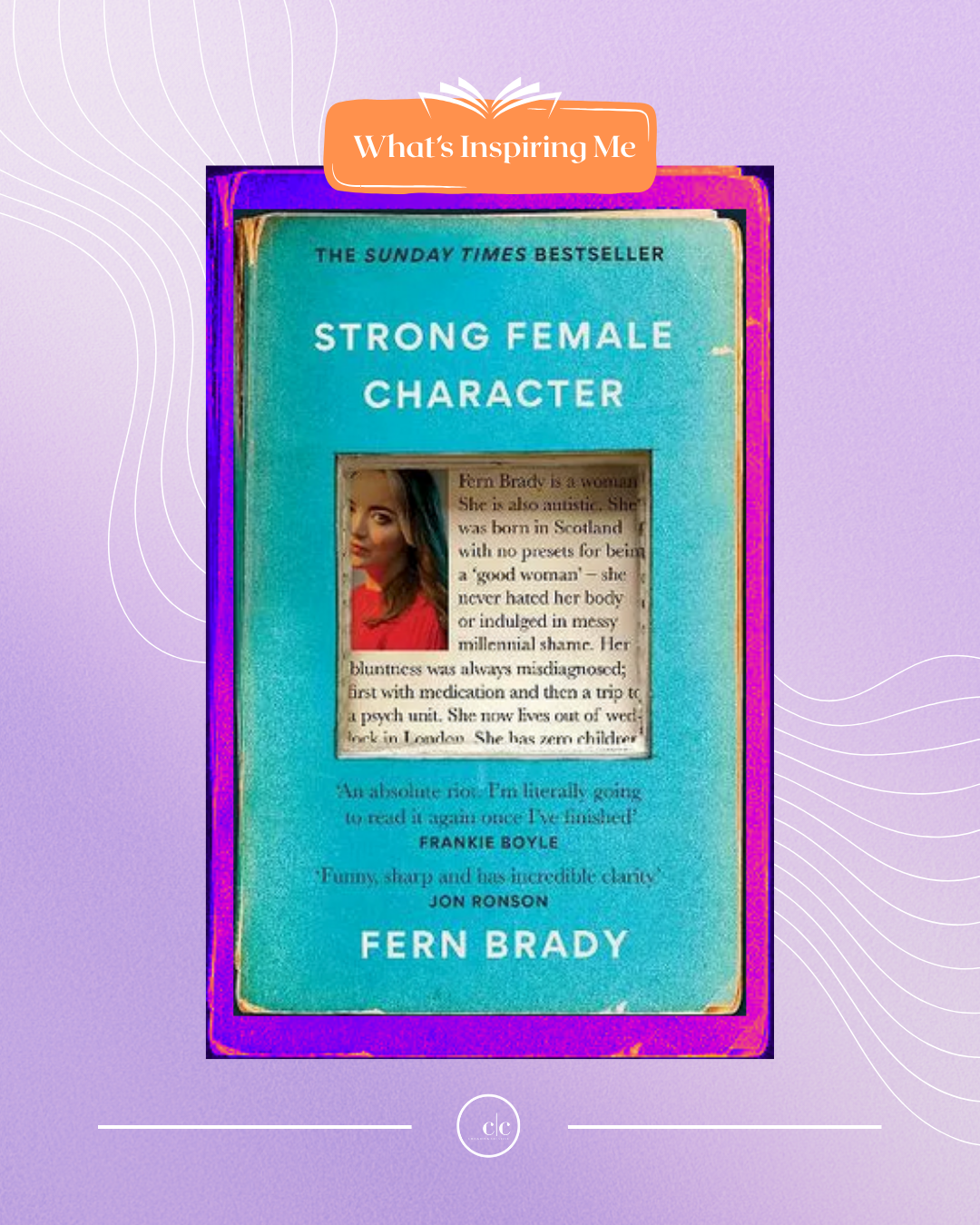
What’s Inspiring Me: Strong Female Character by Fern Brady
My face and a link to schedule your free consultation.
🧠 Weekly MindSweep No. 238 | Curated Conversation |
How Dare You Tend to Me. I’ve got it.
Fifty topics in, and interdependence is the one we're the worst at.
My son was maybe seven, standing at the front door, trying to zip his own jacket. The zipper had caught on the fabric, and he was working it with two hands, tongue out, completely focused.
I watched for four seconds. Maybe five.
Then I reached over and fixed it myself.
Of course he hadn't asked me to. I don't think he even registered what happened as he was already halfway to the door with his twin brother. But today, I can register what happened. Because it wasn't the first time; it was the four-hundredth zillionth time, in a hundred different ways of tending others, and only now can I see clearly what I was doing.
I've spent years in other people's businesses seeing exactly how a process could run leaner, produce faster, be better, while feeling this pull in my chest to say something, fix something, insert myself into a system that hadn't asked for me to do anything.
Then I've built my own businesses specifically so I'd never have to wait for anyone. Ah, the freedom, flexibility, and nobody to depend on! Which, of course, also meant there was nobody I had to explain myself to either.
I proudly called it all initiative and independence and internally labeled it as being good at what I do.
At seven, my son knew how to zip his jacket, and how to fix it when it got stuck.
Through my own growth, a bit of maturity, and quite a few (thousand) invitations to practice, I can finally name what was happening standing in the kitchen stepping in to fix something no one asked me to.
I couldn't let anyone else finish the zipper. Not my son's, or a coworker's, and nobody was ever going to help me zip my own.
I'd built a whole career, a whole identity, around two settings: needed, or self-sufficient. Nobody ever taught me the third one, the one where you can do both, give and receive, lean and be leaned on, in the same relationship, at the same time.
Let's Take a Moment to Define Dependence, Codependence and Interdependence.
Before we can really define interdependence, I want to take a moment to define things that circle it.
Dependence is what it sounds like: leaning on someone else because you can't function without them. A child and a parent, early on, that's dependence, and during that time period it's what it's supposed to be. It’s how our children survive as they build their own skills.
But dependence stops being appropriate the moment someone's capable of more and isn't given the room to try.
Codependence is a term with real clinical roots in addiction and recovery work, where one person's sense of identity and worth becomes fused to managing, rescuing, or controlling another person's dysfunction. I will add that you don't need an addiction in the picture for this pattern to show up.
You just need one person who's decided that being needed is the job, and who quietly does the zipper before anyone gets the chance to struggle with it.
Independence is the opposite end entirely. Total self-sufficiency. No leaning on anyone, for anything, ever. On the surface, it sounds like strength; heck, it might even feel like the goal. And, it can be for a while.
But then it becomes its own kind of trap because a person who can't receive anything from anyone is just as stuck as someone who can't function without them.
Interdependence sits between all three, and it's mutual by definition. Support flows in both directions, giving and receiving hold equal value, and neither person's worth depends on being the one who's needed or the one who never needs anything.
It's a state that requires more skill than either extreme, since it asks you to tolerate both being relied on and relying on someone else, without collapsing into either role.
The Half We're Actually Good At
Interdependence can be tricky for a lot of entrepreneurs. We are already fluent in the giving part: Tending someone else's garden, showing up when someone's overwhelmed, stepping in to support another human in need. That part comes naturally to us, maybe sometimes a little too easily.
It's the receiving half that will completely stop us in our tracks.
And, if receiving feels unsafe or shameful, the relationship doesn’t stay interdependent; it quietly becomes one-directional again, just flipped. You become the one who gives without ever letting anyone reciprocate. This can be isolating, even inside a room full of people who’d help you in a second if you let them.
There's a real reason receiving specifically feels harder than giving. Attachment.
Humans who grew up with needs that weren't reliably responded to often learn early that self-sufficiency is safer than asking. Expressing a need risks being read as “too much,” so the adaptation becomes staying quietly self-sufficient and keeping needs entirely out of conscious awareness. This is not a personality trait you are born with; this is a survival strategy that made sense once and then was never updated in our neural pathways.
For creative entrepreneurs with ADHD, this can be compounded by rejection sensitivity (RSD). RSD is not a formal diagnosis, but it names a well-documented pattern: up to 70 percent of adults with ADHD report heightened emotional sensitivity to rejection or even perceived criticism.
If a lifetime of feedback has taught you that needing help gets met with frustration or a "why can't you just," then asking isn't neutral. It's a real risk of activating that rejection response.
So it's not just harder to receive; for a lot of us it can feel like a threat.
Self-worth that is tied to competence can be the other half of it. When your sense of being capable is bound up with being the one who handles things, needing support can trigger real shame because your identity itself feels threatened.
Social psychologist Vanessa Bohns has spent years studying what she calls the "underestimation-of-compliance effect": people reliably underestimate how willing others are to help, and overestimate what it'll cost them socially to ask. In one of her studies, participants guessed they'd need to approach about seven people to get a single yes. In reality, it took closer to two or three. Which means the giver who can't receive isn't wrong that giving feels good; it does, it's one of the richest sources of self-esteem there is. We're just miscalculating the other side of the exchange, assuming receiving will cost us something that, for most people, it never actually does.
Five Things to Watch for This Week
Our first week is just about the noticing. Here's where these patterns tend to show up for creative entrepreneurs with ADHD, in business and in life:
The "I'll just do it myself" reflex. Someone offers to help with something, or you're about to delegate a task, and before you've even finished the thought, you've already started doing it yourself. For those of us with creative, ADHD brains, that reflex is fast. It's rarely about efficiency.
The urge to fix something nobody asked you to fix. You spot a better process, a smarter workflow, a mistake someone else is about to make, and you feel the pull to step in before you're invited. That pull is worth naming, not automatically acting on.
Discomfort when a compliment or offer of help lands. Someone says "let me take that off your plate" or "you did a great job," and you deflect, minimize, or immediately look for a way to return the favor before the moment's even finished. That deflection is data.
Guilt or anxiety when you're not the one being needed. A day goes by where nobody asks you for anything, and instead of relief, you feel something closer to unease. Worth sitting with what that unease is actually about.
The mental math of "what will this cost me." Someone offers something, support, time, a favor, and your brain immediately starts calculating what you'll owe them back. Notice if that calculation happens before you've even said yes.
We are not attempting to change any of these this week. Just catch yourself in one of them. Notice, write it down, journal about it, or share it with me.
We're 50 Topics In.
I've been thinking about that zipper a lot this week. I don't view fixing it then as an enormous failure; it wasn't; it was one small moment in one ordinary afternoon trying to get through life with twins. But now I can see the pattern in a place that I can't argue with myself about. My son didn't need me to save him four seconds. He needed the four seconds. The struggle was the point.
The same struggle I've been quietly, efficiently, protectively taking away from working environments, from my own kids, and most of all, from myself, every time someone's offered to help and I've found a reason to say "I've got it."
The energy that I've spent (for free) when no one in the room asked.
This month, that's what we're bringing into the light. Noticing the four seconds we jump in on and noticing what it costs us to let someone else help us with ours. And what it might feel like to notice this automatic response, so we can learn to rewire the neural pathway and feel brave enough to ask for the support we need.
Interdependence, being Curated Conversations 50th topic, feels like the right place to notice it. This session itself is proof of the point.
We didn't get here by any of us doing this alone.
My questions for you this week:
Where in your life or business have you become the only one who can do something? How did that happen, and who benefits from it staying that way?
Finish this sentence honestly: "If I let someone help me with this, I'm afraid it means ___." Sit with the answer before you explain it away.
Reply and share with me!
✨ You Belong Here. I can help.
Want Support Naming Where This Shows Up in Your Business?
If reading this stirred the "I've got it" reflex, the discomfort of being helped, or the quiet exhaustion of being the only one who can fix it, you don't have to sort through it alone.
That would rather defeat the point.
A MindSweep Mapping Session is a space to bring the tangle of your business, your workload, and the patterns you're finally starting to notice, and leave with a clearer picture of what's actually yours to carry and what's not. chickbookcreative.com/mind-mapping
If you're not sure where to start, a free 30-minute consultation is the easiest first step!
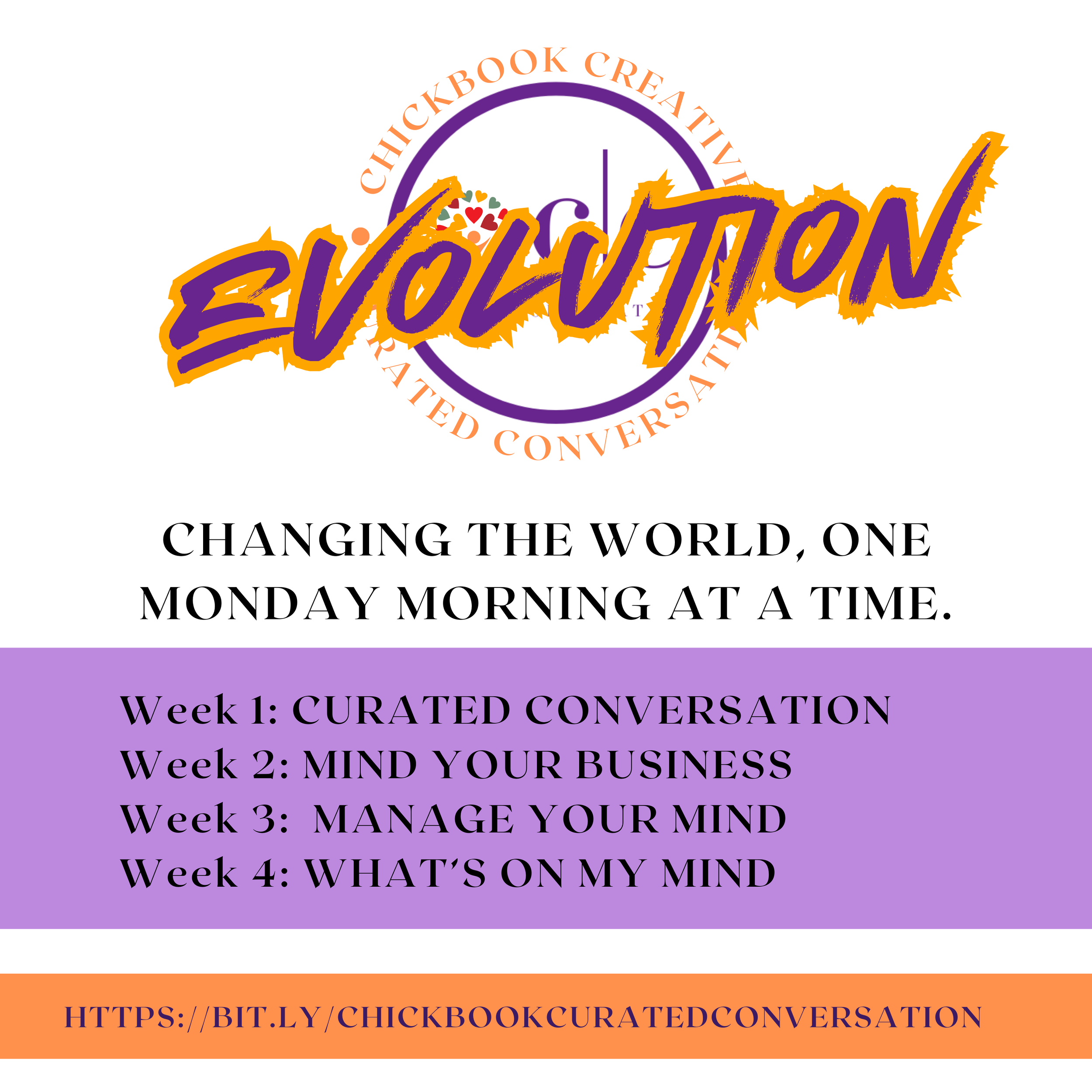
Curated Conversation
This Monday marks our 50th Curated Conversation topic! 238 weeks of showing up in community, not alone. It felt right that Interdependence is the topic that gets to carry that milestone.
Every Monday at 8am EST, Curated Conversation Evolution is a room full of creative entrepreneurial brains that get it. Bring the thing you've been handling alone.
August is our month on Interdependence. Your first month is free. Come find out what it feels like to be in the room where it's safe to say the thing out loud.
Listen if you want. Speak if you're ready. Stay if it feels like home.
Mondays at 8 a.m. EST. Start with coffee. Belonging included. 💜
Was this blog forwarded to you? Sign up!
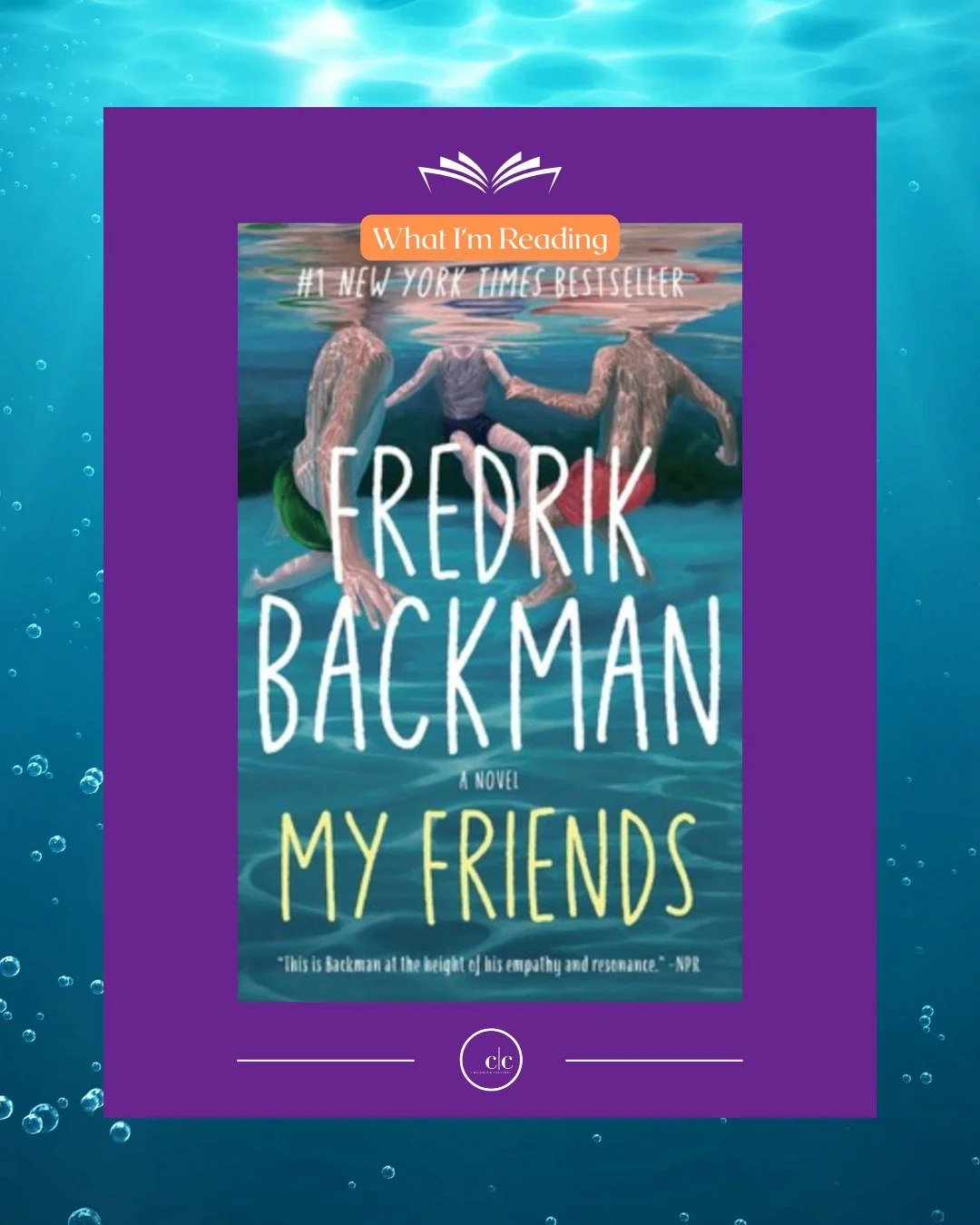
What I’m reading
Strong Female Character
by Fern Brady
Performing “normal” and what it costs.
Thank you very much, Instagram algorithm, for bringing Fern Brady’s book into my awareness. Yes, I did go to the link in her bio and purchased her book through the Independent Book Store in Edinburgh, Scotland. And, yes, I also needed the tote bag from The Portobello Bookshop to carry my new book around Massachusetts. (I’m proud of myself for only ordering those two things!)
What's Inspiring Me: unmasking as a business strategy, not just a personal one.
In other news…
Feeling #FOMO about Curated Conversations? Join us!