🧠 Weekly MindSweep No. 243 | Mind Your Business | Masking
September 2026
Week 242 | Curated Conversation | Masking
*Week 243 | Mind Your Business | Masking
Week 244 | Manage Your Mind | Masking
Week 245 | Manage Your Mind | Masking
New to the Weekly MindSweep? Past issues live here.
Let’s Sweep The Brain!
🎬 Rather watch or listen instead of read? Now you can!
Subscribe to YouTube @chickbookcreative
In the MindSweep this week:
Weekly MindSweep:Past issues live here.
Curated Conversation: Join our community; Mondays at 8am EST
What’s Inspiring Me: Awaken Your Myth by Erik Ireland
My face and a link to schedule your free consultation.
🧠 Weekly MindSweep No. 243 | Mind Your Business | Masking
We Got Promoted for Masking What It Cost Us
What it cost to look like we had it together, and why the mask followed us into entrepreneurship.
I’ve had countless performance reviews where I “exceeded expectations” in every category.
And I’ve had years of school report cards that have said the same. Composed under pressure. Strong communication. Reliable follow-through.
My managers would read them out loud like it was a gift, and in those moments, I would smile and say thank you, because I guess that’s what you do?
What they didn’t know was what it actually took to earn those words.
I’d always arrive early enough to run through the day in my head before anyone could catch me looking unprepared. I’d prepare and rehearse how I’d respond in meetings before the meetings even happened, complete with my calm, measured replies to questions nobody had asked yet. I kept my files and notes aggressively tidy, not because I’m naturally tidy, but because a messy digital presence felt like evidence and proof that I couldn’t actually handle what I was doing.
I’ve learned over decades of expectation to sit still in a way that wasn’t sitting still at all. It was a constant low-grade effort in every single meeting to keep my leg from bouncing, my pen from clicking, and my attention from visibly wandering toward literally anything else in the room.
But by early afternoon, I had nothing left.
Completely emptied. I’d get in my car in the parking lot and just sit there for a few minutes before I could make myself drive, not doing anything, just recovering enough to function through the rest of what was waiting for me at home: the kids, the meals, the laundry; my other full-time job.
And it worked. It worked so well that I got promoted and praised for it. I was handed more responsibility because I’d proven, convincingly, that I could handle everything without ever once looking like it cost me anything.
Nobody ever asked what the composure was made of. I don’t think I’d ever asked myself either. Not until I was sitting in that review, holding a piece of paper that said I was excelling, while some quieter part of me was doing the math on how much longer I could keep affording this.
I didn’t leave that job because I failed. I left because I couldn’t sustain it, and succeeding at it had cost me everything I would have needed to actually enjoy it.
Maybe you’re on the other side of this. Maybe the performance never quite held for you, the leg kept bouncing, the tangent got followed out loud, the deadline slipped in a way that was visible to everyone in the room.
Maybe you got the other kind of review, the one that used words like “needs improvement” or “struggles with organization,” and you spent years quietly believing that meant something was wrong with you, rather than something was wrong with the room.
That’s masking too, just from the other side. Mine was the exhausting work of making the struggle invisible. Yours might have been the impossibility of making it invisible at all, no matter how hard you tried, and then absorbing the fallout of being seen as difficult, careless, or not trying hard enough, when the truth was you were trying constantly, just not in a way the room knew how to recognize.
Either way, we landed in rooms that were not built for how our brains actually work.
Why This May Have Led Us Here
So how do so many of us land in entrepreneurship?
I used to think I left that job because I burned out. That’s true, but it’s not the whole story.
For a long time, the story I told myself was that entrepreneurship called to me. That I wanted freedom, flexibility, and the chance to build something on my own terms. It’s the same story most of us tell ourselves when we leave. And some of that was real. But my research on ADHD and entrepreneurship suggests something a little less romantic is sitting underneath it.
Researchers studying ADHD entrepreneurs expected to find that the impulsive, thrill-seeking side of ADHD was the biggest draw to starting a business. What they actually found was something completely different:
People with ADHD chose entrepreneurship, or left salaried work altogether, primarily because they had problems with focus inside traditional workplace structures. Not because they craved risk but because the room they were working in wasn’t built for how their attention actually moves.[1]
Wait, I didn’t leave because I wanted an adventure? No, Jamie. You didn’t. You left because staying required a performance your focus couldn’t keep funding indefinitely. 🤯
Turns out I’m not the only one who’s ever sat in a parking lot doing that math.
Across different countries, researchers keep finding the same pattern: people with ADHD end up self-employed at higher rates, and it’s not the inattention or the impulsivity driving it. It’s the hyperactivity, which tracks. Sitting still, staying composed, performing calm- that was never a small thing. That was a second job, hiding inside the first one. [2]
For autistic entrepreneurs, it’s less about preference and more about which doors were even open. Only 14 percent of autistic adults in the U.S. hold full-time employment. Unemployment runs above 80 percent overall. [3,4]
Against numbers like that, starting your own business stops looking ambitious and starts looking like one of the only doors left. It’s a lot easier to build the accommodations you need when you’re the one deciding what the workplace looks like.
For a lot of us, that’s the honest version of our entrepreneurial origin story. Not a calling. Not a lifestyle upgrade. It’s what’s left standing after enough cycles of workplace trauma, burnout from masking and overcompensating, and career pivots that were not about ambition, but rather survival. [5]
I didn’t walk toward entrepreneurship so much as I ran out of road in the other direction. And I don’t think I’m the only one in this community who could say that.
Why, Where, and How It Continues in Entrepreneurship
Leaving the job didn’t end the struggle.
I thought self-employment would be the exit. No more performing focus in someone else’s meetings, no more rehearsing calm before I walked into a room. And in some ways, that was true. But the mask didn’t disappear when the job did. It just found new rooms to live in, rooms I’d built myself, which somehow made it harder for me to notice.
There’s a researcher who works specifically with self-employed autistic and AuDHD business owners who describes almost exactly what I found on the other side of my burnout exit:
“These are people who are stressed, exhausted, and quietly blaming themselves for not being able to do ‘all the things’ that running a business requires — the same people who left traditional jobs precisely because they weren’t built for those environments either. The story doesn’t end with, ‘and then I found the right fit.’ Sometimes it continues with, ‘and then I built a version of the wrong fit, just for myself.’ [6]
Once you know what to look for, masking hides inside the actual verbs of the everyday moments of entrepreneurs running a business:
“Networking” often means exhausting yourself with a full performance.
Follow that up with some shame over the energy it cost, or dread of all the follow-up work you just created for yourself.
“Hustle” means pushing straight past your body’s signals, making real rest harder to access and sensory overwhelm worse.
“Put yourself out there” can trigger old relational wounds, and instead of connection, you get resistance and a pull to hide.
And an all-time favorite: “Just sell” often means talking yourself into tactics that have never sat right with you, until you feel stuck, overexposed, and ‘done’ before you’ve even started.
None of this is a lack of discipline. It’s the same performance from the old job, wearing a super soft founder’s hoodie in your brand colors instead of business casual.
And here’s where the pattern gets especially sneaky for creative entrepreneurs:
Masking doesn’t just cost energy anymore. It starts shaping actual decisions.
The client you don’t take because the sales call felt too exposing.
The offer you water down because the version that’s really you feels too risky to put a price on.
The role, or even the whole business model, you choose because it looks reasonable on paper, while quietly requiring you to perform a version of yourself that fits nothing about how you actually think or work.
We don’t always recognize this while we’re doing it. We recognize it later, in the way I recognized it in the parking lot, sitting somewhere quiet, doing the math on how much longer we can keep affording it.
Beginning With Noticing
The cost of sustained masking is real enough to have its own clinical name. Prolonged masking has been directly linked to what researchers call autistic burnout, marked by extreme mental and physical fatigue, emotional withdrawal, and a real, measurable drop in daily functioning.[7]
That’s not a performance tactic; that’s documented. My parking lot wasn’t a bad day. It was a body running a deficit it couldn’t keep covering.
Um, so Jamie, where does that leave us?
Well, it’s not with a plan to stop masking completely, because that’s still not realistic, and still doesn’t feel safe. But we need a safe small step to start.
In all of the research I’ve found, we do not “need more willpower.” We need concrete structural systems and accommodations.
Predictable routines. Even when our thinking brain fights them.
Clear written instructions. Not ideas rolling around in your brain pan. Get support in laying out your ideas.
Fidgets. So we can move when we need to move.
Noise-canceling headphones. To obtain quiet when we need quiet to focus.
Sensory-informed practices like guided breathing. Not generic mindfulness content that assumes every nervous system regulates the same way.
Presence support. Body doubling, guidance, a coach or mentor (me!).
Buffer time between tasks. So the transition itself doesn’t cost as much as the task.
Permission to say “let me think about it.” Instead of performing an answer you haven’t actually landed on yet.
Environments you actually chose. Lighting, seating, background noise, all set by you, not inherited from someone else’s idea of a “professional” space.
A place to name what’s hard, out loud, without it becoming a whole production. A friend, this community, a notebook. Somewhere the mask can come off before the exhaustion forces it off.
The through-line in all of it: systems, not sheer effort.
You can’t rely on willpower or rest on values alone to keep you from a sales approach that leaves you feeling hollow, or on good decision-making in the middle of brain fog. The goal isn’t gritting your way through the performance more efficiently.
It’s building a business with fewer places where the performance is required in the first place.
That starts small, and it starts with noticing, not overhauling.
Where in your business is the mask working overtime right now? Which meeting, which platform, which sales conversation costs you the most to walk into looking composed? You don’t have to change any of it yet. Just start noticing where the performance is running, and what it’s asking of you every time it does.
Because again, the bill comes due. The only real choice is whether we keep discovering that in a parking lot, or whether we keep practicing interdependence and start asking for what we need sooner.
My questions for you this week:
What's one word in your business vocabulary that secretly tells your brain to "perform now"? (Networking. Hustle. Just sell.)
What would it look like to build one system instead of finding one more ounce of willpower this week? (Routine, Support, Permission) Where could you start just one?
Reply and share with me!
✨ You Belong Here. I can help.
You don't have to keep discovering the cost of masking alone.
If you're ready to build a business with fewer places where the performance is required, that's exactly what we do together in a MindSweep Mapping Session. We’re not trying to overhaul everything overnight, we're just going to start noticing and start shifting, together.
Or, book a free consultation to have a conversation about where your mask is working overtime and what a system instead of sheer effort could look like for you.
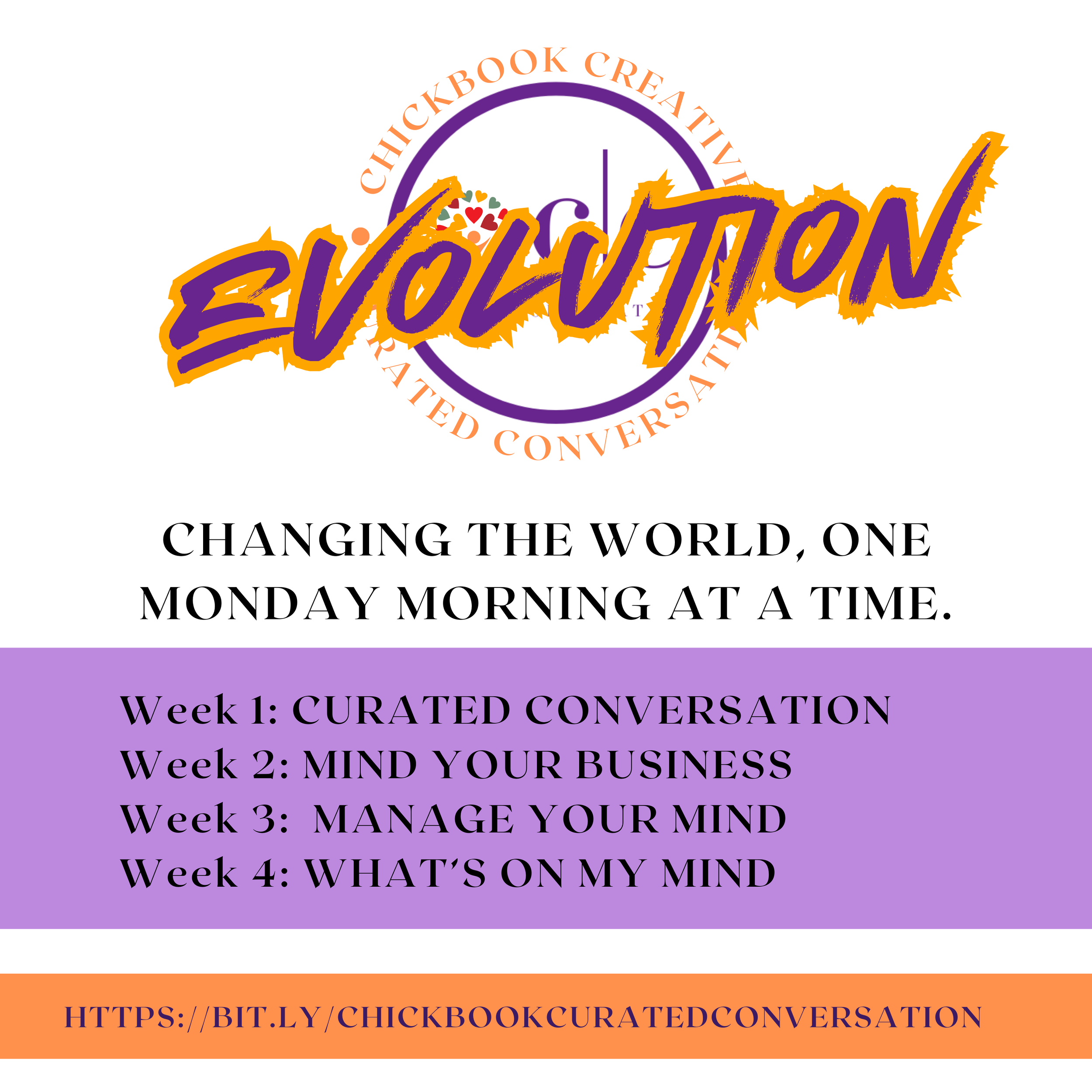
Curated Conversation
You Read It. Now Come Sit In It.
This one's too big to sit with alone. Join us for this month's Curated Conversation, where we're going to talk through Masking in entrepreneurship: the real cost of it, the sneaky ways it shapes decisions we don't even clock as decisions, and what safe, small steps toward less performance actually look like in practice.
Bring your parking lot moment. Bring your "networking means exhausting yourself" moment. Bring whatever is true, not composed.
Every Monday at 8am EST, Curated Conversation Evolution is a room full of creative entrepreneurial brains that get it, and a little built-in body doubling to go with them. It's where "I don't know where to start" gets said out loud, and where the missing middle starts becoming visible, together.
Listen if you want. Speak if you're ready. Stay if it feels like home.
Mondays at 8 a.m. EST. We start with coffee and belonging is included. 💜
Was this blog forwarded to you? Sign up!
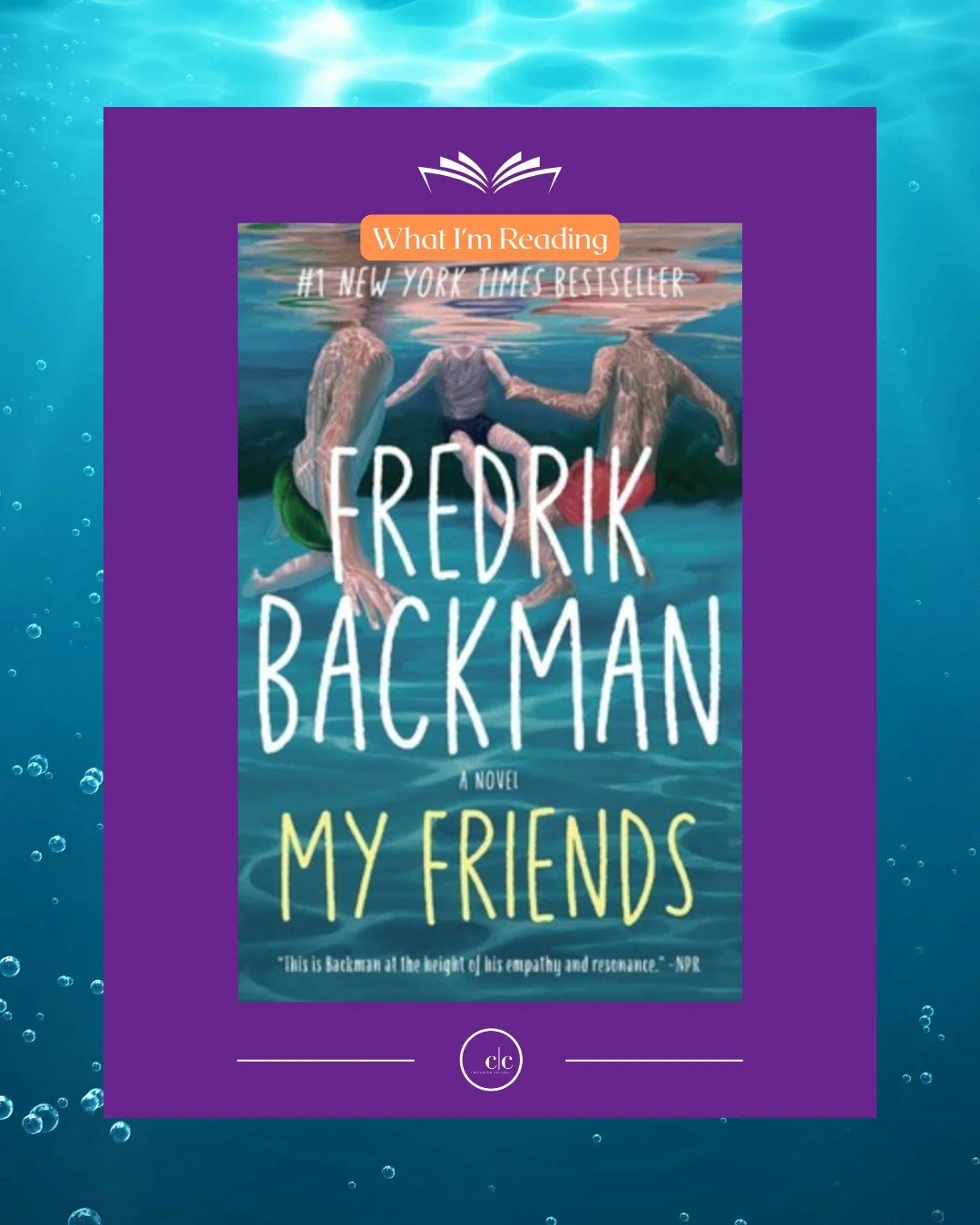
What I’m reading
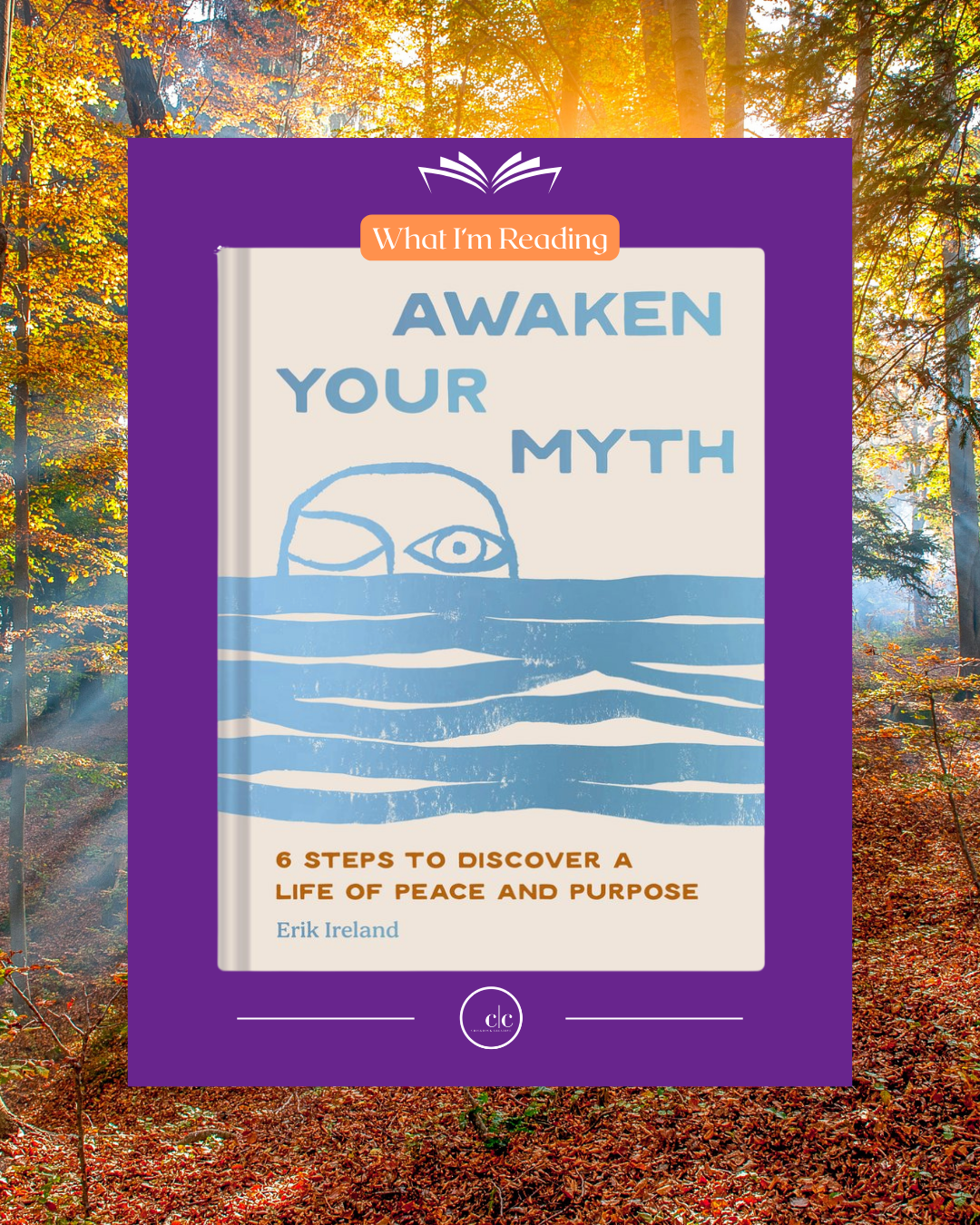
Awaken Your Myth
by Erik Ireland
I found Erik Ireland the way most people do — through his voice. He's the host of Listen to Sleep, a podcast where he tells bedtime stories and reads meditations from what sounds like a cabin somewhere in the mountains. I put it on one night, heard him mention growing up in New England, time spent in Rhode Island — where I grew up — and something in me just went: this is my person.
What's Inspiring Me: Being fully seen isn't the same as being “real” for an audience — it's the harder, quieter choice to stop editing yourself down to something palatable.
1. The "focus problem" finding (contradicts thrill-seeking assumption)
 "ADHD Can Affect Entrepreneurs' Earnings and Business Success," Entrepreneurship & Innovation Exchange (eiexchange.com), citing peer-reviewed research on ADHD entrepreneurs
 https://eiexchange.com/content/ADHD-can-affect-entrepreneurs-earnings-and-business-success
2. Consistent positive association between ADHD and self-employment, driven by hyperactivity specifically
 "The association between attention-deficit/hyperactivity (ADHD) symptoms and self-employment," PMC (National Library of Medicine), using Swedish (STAGE) and Dutch (GUESSS) cohort data
 https://pmc.ncbi.nlm.nih.gov/articles/PMC5005387/
3. Autism employment statistics (14% full-time employment, 85% underemployed among college-educated autistic adults)
 Hazlett, "The Importance of Resources and Interventions for Mid-Career Autistic Professionals: Preventing Burnout, Masking, and Associated Risks," Diversity & Inclusion Research, Wiley Online Library, 2025
 https://onlinelibrary.wiley.com/doi/10.1002/dvr2.70016
4. Autism unemployment rate above 80% (Autism Speaks Canada figure)
 Cited in: "Autism and entrepreneurship: An examination of the effectiveness of self-employment as a model to address the economic isolation experienced by individuals with autism spectrum disorder," University of Victoria dissertation repository
 https://dspace.library.uvic.ca/items/9bc16420-0bc3-4c9f-a499-f16a665e8549
5. "Entrepreneurship isn't a choice" framing, workplace trauma, burnout, necessity-driven career pivots
 "Neurodivergent Masking & Leadership: When Entrepreneurship Isn't a Choice"
 https://www.lesbianagenda.com/resources/blog/the-unspoken-truth-about-neurodivergent-masking-leadership-when-entrepreneurship-isn-t-a-choice
[6] "How to Build a Burnout-Resistant Business as a self-employed Autistic/AuDHD," Autism Chrysalis, 2026, https://www.autismchrysalis.com/2026/03/31/how-to-build-a-burnout-resistant-business-as-a-self-employed-autistic-audhd/
[7] Hazlett, "The Importance of Resources and Interventions for Mid-Career Autistic Professionals: Preventing Burnout, Masking, and Associated Risks," Diversity & Inclusion Research, Wiley Online Library, 2025, https://onlinelibrary.wiley.com/doi/10.1002/dvr2.70016
In other news…
Feeling #FOMO about Curated Conversations? Join us!