🧠 Weekly MindSweep No. 220 | Curated Conversation | Tolerance
April 2026
*Week 220: Curated Conversation: Tolerance
Week 221: Mind Your Business: Tolerance
Week 222: Manage Your Mind: Tolerance
Week 223: What’s On My Mind: Tolerance
New to the Weekly MindSweep? Past issues live here.
Let’s Sweep The Brain!
🎬 Rather watch or listen instead of read? Now you can!
Subscribe to YouTube @chickbookcreative
In the MindSweep this week:
Weekly MindSweep: Past issues live here.
Jamie’s Second Brain Corner: Links to references & MindSweep Mapping
What’s Inspiring Me - Fawning by Ingrid Clayton
Collaboration: with Shannon Giordano and the MetroWest Chamber of Commerce (First Friday of every month)
My face and a link to schedule your free consultation.
The Space Between Reaction and Response
How tolerance shapes your decisions, visibility, and growth as a creative entrepreneur
If resistance shows us where we stop, this Curated Conversation asks a tougher question: what does it actually take to stay?
It's not about pushing through or ignoring what you feel. It's not about acting calm or telling yourself you're okay when you're not.
But to stay.
To stay present in the moment when your body tenses up, when you feel yourself pulling away, and when the discomfort is clear.
You feel it in your body and your thoughts narrow: “I don’t like this,” “I don’t agree,” or “this is uncomfortable.” Now, due to our work in Curated Conversations, you notice and name it.
This is resistance!
At first, that awareness feels powerful. It’s like you’ve discovered something important. But then you might wonder,
Okay… but now what?
Naming resistance doesn’t make it go away. Understanding it doesn’t mean you move past it. Awareness, on its own, doesn’t create change. It simply places you directly inside the moment you used to move past without noticing.
Because once you can see the moment of resistance arrive, you also begin to see your patterns with a level of clarity that’s hard to unsee. You notice the way you soften your stance just enough to make something easier to tolerate. The way you add one more step before taking the real step. The way you reframe, rework, or retreat consistently, predictably, without even thinking about it.
It’s been your natural, normal, safe neural pathway to stay regulated.
That urge to move away or fix the discomfort quickly is your nervous system doing its job: trying to reduce the threat, bring you back to balance, and help you feel safe again.
Our next step together isn’t about stopping discomfort or reactions, but learning to feel them without immediately withdrawing.
It’s about staying with the presence of friction without rushing to resolve it. It’s about holding the moment long enough for something new to happen, rather than following the well-worn neural pathway of habit.
The space between your reaction and your next move is where true tolerance develops. In that space, you have the power to choose your response.
We’re here to continue unpacking the layers. To lean into the practice. To step into a lived-in-the-body capacity to stay present long enough to choose your next move instead of being pulled into it.
If resistance is where you stop, tolerance is where you learn to stay.
What Tolerance Actually Is (And What It Isn’t)
We often see tolerance as quietly going along, sitting with discomfort without reacting or making things awkward for others. People might call it maturity, emotional control, or being “easy to work with.”
Tolerance can also means downplaying feelings or smoothing things over too fast to avoid conflict. That’s not true tolerance; that’s self-suppression posing as composure.
But that’s not what I see in this work. It’s also not what I experience as a business owner, a leader, and a human moving through a very dysregulated world.
Tolerance is not agreement. It does not mean you suddenly agree with what’s in front of you.
Tolerance is not approval. It does not require you to endorse, validate, or make something “okay” that isn’t.
Tolerance is not abandoning yourself. It does not ask you to override your values, your instincts, or your boundaries to keep the peace.
Tolerance is not avoidance dressed up as maturity. It’s not numbing out, checking out, or telling yourself you’re “fine” while quietly disengaging.
Tolerance is much more active than that.
Tolerance is staying present with something that challenges you, without rushing to fix it, flee it, or fight it. It’s holding the moment long enough to choose your response instead of defaulting to your first reaction.
A few years ago, we talked about capacity—what you actually have available to you at any given moment. Not what you should be able to hold, but what is truly accessible in your system.
Last month, we explored resistance, which is the internal and external forces that keep you from moving forward, even when you have the capacity.
Tolerance acts as the essential bridge between your capacity and your resistance, enabling you to move forward.
Because you can have capacity, you can understand your resistance, and still not move if you cannot tolerate the experience of the moment in front of you.
Tolerance is what lets you use your capacity, even when resistance is still there.
Where This Shows Up
Tolerance doesn’t show up in big, dramatic moments. It appears in the quiet, in-between parts of your day. These places don’t seem important, but they actually shape how you act.
It’s there when a client gives feedback that feels off, and you tense up inside. It’s there when you check your numbers and want to look away, or when you tell yourself you’ll deal with it later. It’s there when you’re about to share something new—like an idea, a post, or an offer—and you pause, not because you don’t know what to say, but because you’re already thinking about how others might react.
It shows up when you compare yourself to others, in conversations, in moments when things don’t line up, and in the space between what you expected and what’s really happening.
If you’re a creative or neurodivergent entrepreneur, your brain seeks efficiency, meaning, and safety. When things feel unclear or heavy, you want to fix them fast and restore order.
Tolerance is the skill that lets you remain in moments of discomfort, resisting the impulse to immediately change things.
Your Brain and Your Body in Tolerance
What’s happening inside isn’t about a lack of discipline or the wrong mindset. It’s just your nervous system doing what it’s supposed to do.
When something feels uneasy or uncomfortable, your brain flags it. The amygdala sees it as a potential threat, even when the “threat” is just visibility, disagreement, or uncertainty. Your body responds by tightening, bracing, and preparing to act. In that activation, your prefrontal cortex becomes harder to reach. That’s where we can make quick decisions and mistakes.
So your urge to fix, avoid, or move away from discomfort isn’t random. It’s your body’s way of protecting you.
Tolerance isn’t about forcing yourself to stay uncomfortable through willpower. It’s about building the ability to stay calm enough that you can think clearly—long enough to notice what’s really happening and choose your response instead of just reacting.
This is something we practice. The goal isn’t to be perfect.
So, how do we practice?
Five Ways to Begin Noticing Tolerance in Your Life and Business
Before we try to change anything, we start by noticing. Paying attention is what gives us room to make a new choice.
Here are a few places to begin:
Notice the moment right after discomfort hits - Not five steps later. Not after the reaction. The very first moment your system says, “something’s off.” That’s where tolerance begins.
Pay attention to your urgency - The urge to fix it, decide it, solve it, or move past it quickly. Urgency is often your nervous system trying to restore a sense of safety.
Track your micro-adjustments - The little ways you soften your stance, delay a step, or change something because it relieves pressure.
Listen to your internal language - Are you telling yourself “this isn’t working,” or are you actually experiencing “this feels uncomfortable”? That distinction matters.
Experiment with staying 10% longer - Not indefinitely. Not to prove anything. Just a little longer than you normally would. Long enough to notice what shifts.
A Different Way Forward
During our month on Resistance, I learned it’s not something to get rid of, but something to notice as a signal and use as a tool.
What if the goal of tolerance isn’t to get rid of discomfort? What if it’s to grow your ability to stay with it just long enough to see what’s really true before you act?
When you let go of the urge to fix things right away, you start to see more clearly. You hear your own thoughts instead of just reacting. You respond with intention, not just out of habit.
This is where new decisions come from—when we choose from being present, not from pressure or avoidance.
Over time, this can change everything. And, not because discomfort goes away, but because your relationship with it changes.
For This Week’s Curated Conversation
This week, we’re not trying to master tolerance or make it something to get “right.” We’re just taking an active step into it.
We’re noticing where tolerance shows up in real time—when you feel the urge to leave, when you catch yourself adjusting, or when things get just uncomfortable enough that you want to escape.
And instead of leaving, we’re asking ourselves:
What happens if you stay?
Not forever, not perfectly—just long enough to see what else is here.
Tolerance is not about enduring everything. It's about being present long enough to consciously choose your next step.
That intentional presence is the heart of true change.
My questions for you this week:
Where are you currently “leaving” moments instead of staying in them?
What does discomfort mean to you in your life and/or business right now?
Reply and share with me!
✨ You Belong Here. I can help.
If you often want to pull away, rush, or resolve things just to feel better, you don't have to face that alone.
This is the work I do.
As a brain-based business strategist, I help creative, ADHD-wired entrepreneurs understand the space between reaction and response—the moment your body tightens, thinking narrows, and your next move matters. I won’t force you through it. Together, we build awareness, structure, and strategy so you can stay long enough to choose differently.
Tolerance isn’t about pushing through discomfort. It’s about expanding your capacity to be with it—without abandoning yourself or your goals.
If you know what you want, but find yourself pulling back right before the step that matters most, let’s look at that together.
Let’s start with a conversation. It’s a grounded space to slow things down, see clearly, and outline clear next steps together.
👉 Book a free consultation and learn more about working together below.
Curated Conversation
If this conversation resonated, you don’t have to sit in those moments of discomfort alone.
Curated Conversation is a weekly live space for heart-centered, ADHD-wired entrepreneurs to slow down, reflect together, and build the capacity to stay—right in the space where your instinct is to pull away, rush through, or resolve it too quickly.
Together, we practice noticing what’s happening in real time, without judgment, and without needing to fix it immediately.
If you’ve never joined us, your first month is free. Come sit in the room. Listen if you want. Speak if you’re ready. Stay if it feels like home.
Was this blog forwarded to you? Sign up!
Jamie’s Second Brain Corner:
Words in bold within the Weekly MindSweep are all topics we’ve covered in Curated Conversation. You can dig into them here by searching for the word.
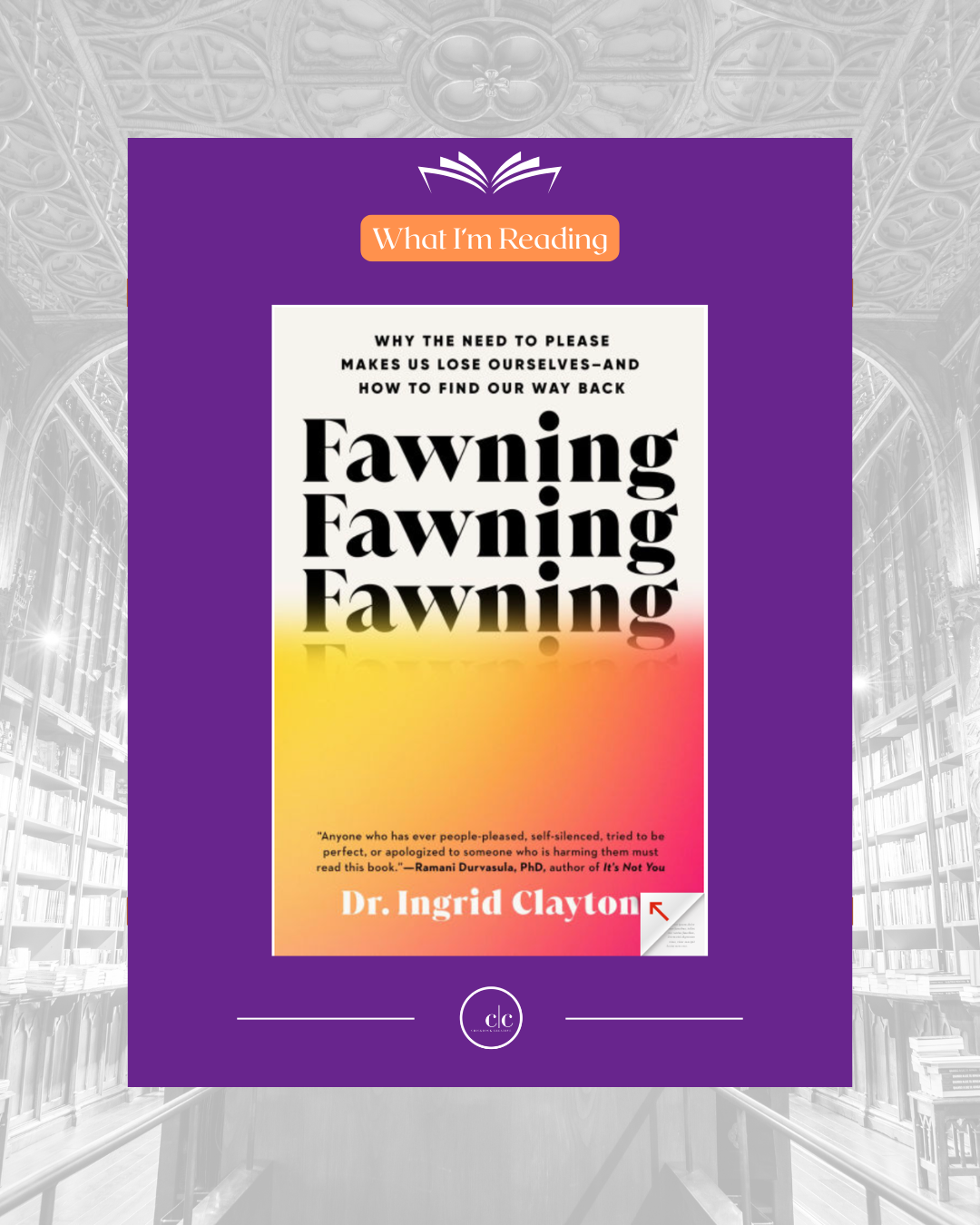
What I’m reading
Fawning.
I’m inspired by the shift from performing for worth to living from inner alignment, where success, visibility, and money feel safe because they’re rooted in self-worth, agency, and self-compassion.

Business Community & Collaboration
Be sure to join us in before our final gathering, June 2026!
THIS Friday, April 3, 2025 Join Shannon and me at the MetroWest Chamber of Commerce for this special session. Different Thinkers. Stronger Teams. Autistic and AuDHD professionals offer valuable strengths like focus, creativity, integrity, and systems thinking. However, many workplaces are not set up to support the way they work best.
In this session, Melissa K. Berger from thriving with autism will talk about the hidden challenges that can slow teams down. She will share simple, practical changes that help neurodivergent team members do their best work, leading to better collaboration, productivity, and innovation for all.
Free: Registration is required: https://bit.ly/MWCOC_April2026





In other news…
Feeling #FOMO about Curated Conversations? Join us!