🧠 Weekly MindSweep No. 241 | What’s On My Mind | Interdependence
August 2026
Week 238 | Curated Conversation | Interdependence
Week 239 | Mind Your Business | Interdependence
Week 240 | Manage Your Mind | Interdependence
*Week 241 | What’s On My Mind | Interdependence
New to the Weekly MindSweep? Past issues live here.
Let’s Sweep The Brain!
🎬 Rather watch or listen instead of read? Now you can!
Subscribe to YouTube @chickbookcreative
In the MindSweep this week:
Weekly MindSweep: Past issues live here.
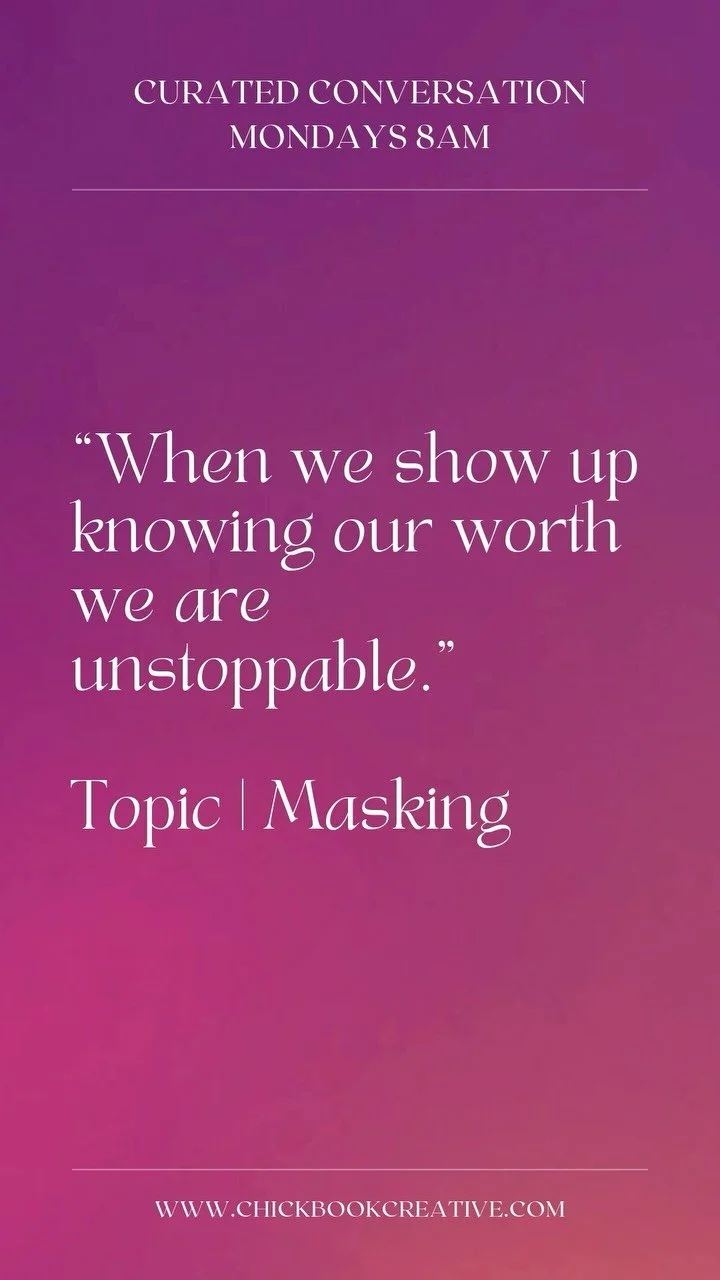
Curated Conversation: Join our community; Mondays at 8am EST
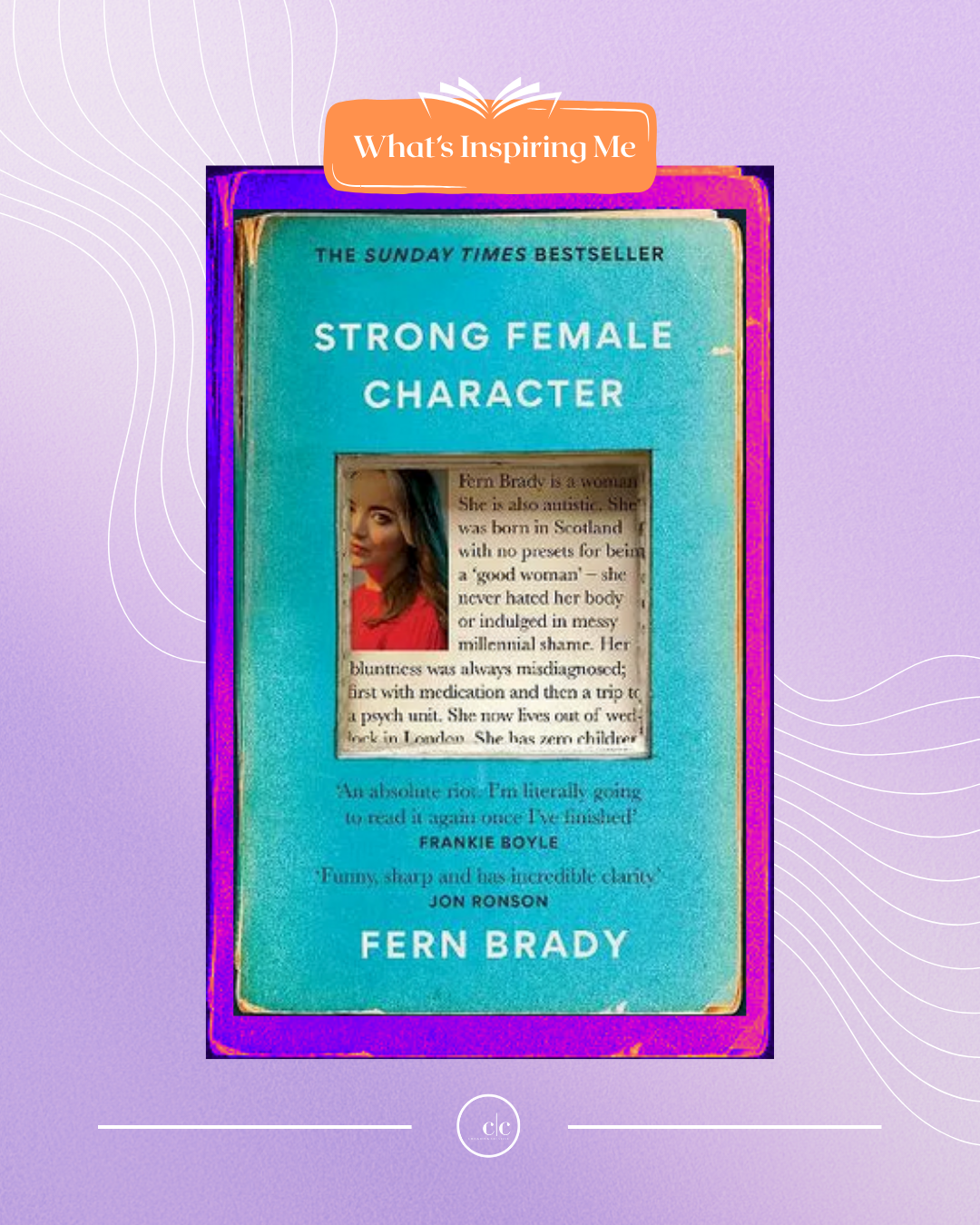
What’s Inspiring Me: Strong Female Character by Fern Brady
My face and a link to schedule your free consultation.
🧠 Weekly MindSweep No. 241 | What’s On My Mind | Interdependence
Interdependence: We Didn’t Just Notice It. We Started Undoing It.
From noticing the pattern to living something different.
I’m folding laundry when I finally admit it to myself.
Just standing at the dryer, matching socks, smoothing wrinkles out of a shirt I won’t iron anyway. It’s what I do when something’s stirred up in me, and I don’t yet have words for it; my hands need a task before my brain can catch up to what it’s actually processing.
A simple ask for help, sitting open on my phone on the washing machine, waiting.
I've left it open for twenty minutes.
It’s not the asking that’s hard, but rather the meaning I’ve learned to give to it. That someone would have to see me not having it all together for me to actually pull myself together. It’s a part of me that I’ve spent years arranging my whole life to avoid.
I fold another shirt. Match another pair of socks (undesirable task btw: sock matching), and somewhere between one load and the next, I notice something I couldn’t have named four weeks ago: I’m learning, slowly, that this is okay.
Four weeks ago, I didn’t have a word for what I find myself standing in the middle of, standing in front of the dryer. I didn’t know Interdependence existed, and definitely not as an actual, livable, human state of being. I knew independence. I knew giving everything to others. I knew how to be the one who’s fine, the one who figures it out, the one who doesn’t need anyone to hold the other end of anything.
What I didn’t know was that support could be regulating.
That being held by someone else, even briefly, even just by phone or text message, could calm a nervous system faster than anything I have ever learned to do alone.
I didn’t know I could rest without earning it first, or ask for something without immediately calculating what I’d owe back. I didn’t know that the automatic thoughts running through my mind and body when something went “wrong” weren’t proof that I was too much. They were a signal. Not crazy, or broken, a factual full-body signal.
And I most definitely didn’t know that when I’m dysregulated, flooded, spinning, or feeling stuck, one of the tools available to me is another human being. That co-regulation isn’t just a nice idea. It’s real, researched, and physiological.
And it works.
This month, I learned to skip the head trash and hit send. I asked for help.
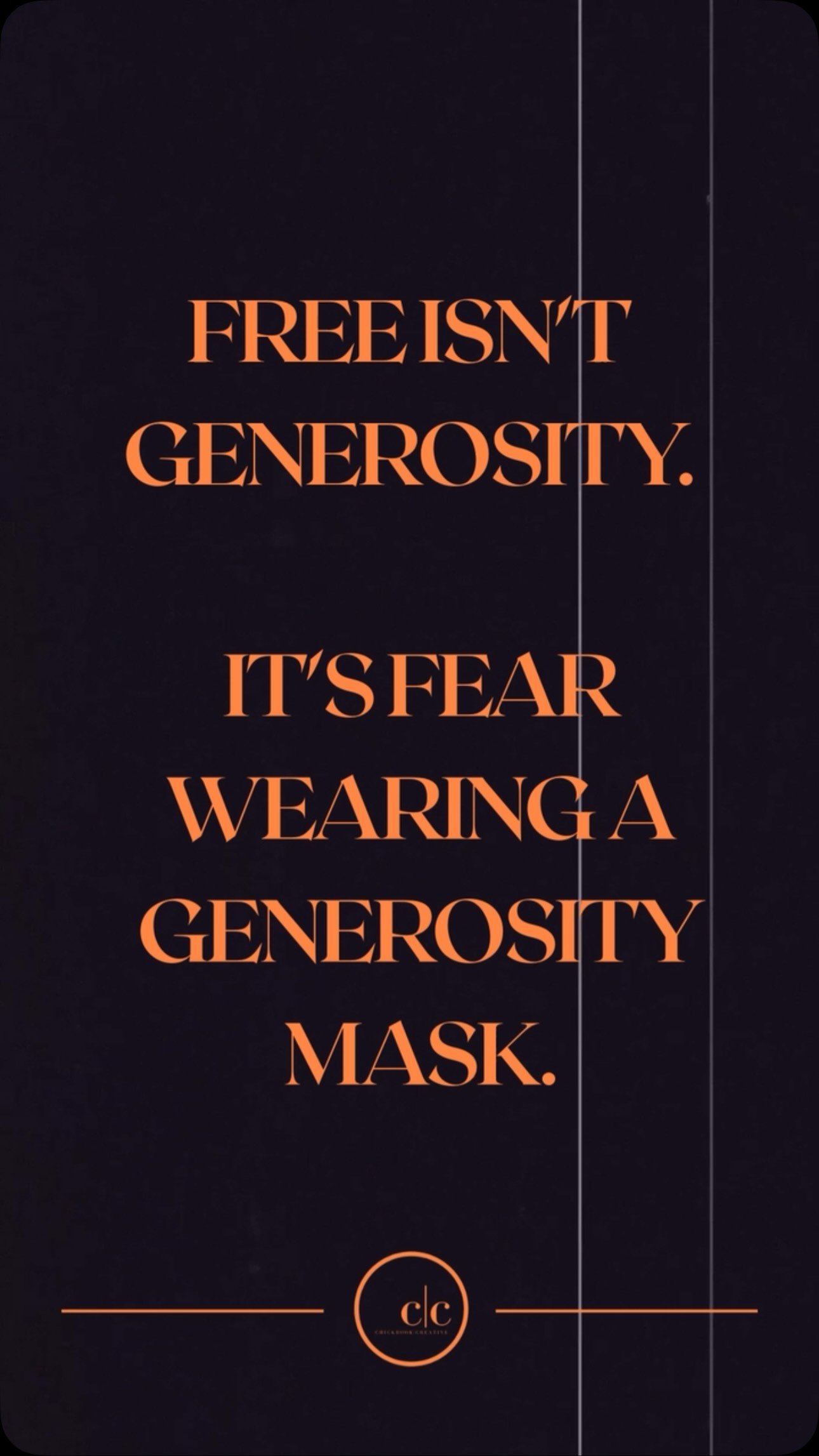
It felt like taking off a mask I didn’t know I’d been wearing so long I’d forgotten it wasn’t just my face.
The laundry got folded, AND this month I didn’t just gain a new awareness; I’ve begun integrating the change.
Where We Started
Let’s take a moment to reflect on where we’ve been:
In Week 238 | Curated Conversation | How Dare You Tend to Me. I’ve Got It, we opened with a question none of us expected to sting the way it did: How does it actually feel when someone tends to you? For a lot of us, the honest answer came fast: uncomfortable.
In Week 239 | Mind Your Business | The Exit Ramp, we followed that discomfort into our businesses and found it wasn’t just personal; it was structural. For a lot of us, entrepreneurship was never just a career choice; it was an exit ramp. It became a way to build a version of control that felt safe. And without meaning to, it became a way to keep teaching the people around us to depend on us instead of the other way around.
In Week 240 | Manage Your Mind | Learned, Wired or Wounded, we went looking for where that pattern actually lives, in the mind and body, and not just the story. We asked whether our reactions were wired, learned, or wounded, and found out that the more useful question was smaller: What is my nervous system communicating right now?
Three weeks of new perspective and awareness. Most of us are fluent in giving, and largely unpracticed in receiving. And every time we said “I’ve got it” before anyone finished offering, we weren’t just being efficient. We learned we were protecting something.
The Shifts I Witnessed Happen This Month
Curated Conversation created a space for us to notice where this was showing up personally and in our creative entrepreneurship, and this month, we saw real change happen in our room right before our eyes. And not just what we talked about, but what people started saying differently by the end.
Seven of them are still on my mind:
From “I am who I am” to “I am who I am, for reasons.” Early in the month, most of us described our independence as fixed. Just how I am. By the end, that language had softened into something more curious. Hard-wired reaction behavior, sure, but hard-wired for reasons, long past, specific, and traceable. Not an identity, but rather learned from a very rich history.
From suppressing the reaction to naming it. More than one of us could point to the exact sentence that taught us to distrust our own feelings. “What are you crying about? I don’t feel a thing. You’re making a much bigger deal out of this.” (Born in the 1900s, anyone?) By the end of the month, people weren’t just remembering those lines; they were recognizing them as learned instructions they’d followed for decades without ever agreeing to.
From “fix” to “heal.” This one showed up almost as a correction, someone catching themselves mid-sentence. “I don’t need to fix this, I need to heal. I’m not broken.” That’s a completely different relationship to the pattern. Fixing implies something’s wrong with you. Healing implies something happened to you, and you’re allowed to tend to it instead of just managing around it.
From coping harder to coping differently. A lot of us came into this month running the same strategy on repeat, just with more effort each time. By the end, the room had landed with a new awareness: coping harder doesn’t work. Coping differently might. This is the difference between white-knuckling independence and actually practicing something new.
From “needing help makes me needy” to “needing others is a positive thing.” It doesn’t make you “needy” because you need to talk to someone. We know how good it feels when others reach out to us. We feel good when we’re helpful and valued. And we want others to have that too. That’s interdependence, lived.
From capability as identity to capability as one tool in the toolbox. For a lot of us, being capable was praised into place until it became the whole personality. We were the people that others could count on, and sometimes that was the reason we felt valuable at all. For a few months now, a quieter distinction is surfacing: capacity versus capability. Just because you’re capable of doing something doesn’t mean you currently have the capacity to. Learning to tell the difference, out loud, and to someone else, was a new perspective.
From masking to asking. “I’m doing my best to mask and not be too much for everyone else.” And underneath that, we found a harder question: does a diagnosis, a label, a reason, equal permission to be yourself? You don’t need permission. You need practice, and a room safe enough to practice being fully self-expressed instead of carefully managed.
Unmasking, On the Clock
Masking our need for support, what it really looks like in the entrepreneurial space, and the importance of community came up quite a bit this month. The idea that if “my clients knew what a hot mess I was,” is often followed by the story “they wouldn’t work with me!”
How can I unmask in my business?
I’ve been carrying that question with me for weeks.
Because masking doesn’t only happen in the moments we’ve been talking about: the deflected compliment, the “I’ve got it” reflex, or the discomfort of receiving. It happens in the version of ourselves we curate for the people who pay us. The polished process, the calm delivery, or the sense that everything behind the scenes runs exactly as smoothly as the finished product looks.
Most of us built that on purpose. Competence is the product in a lot of service-based businesses, so it makes sense that we’d protect its appearance fiercely. But somewhere in that protection, a quieter belief has moved in: if my clients ever saw the actual process, the false starts, the days I’m behind, the moments I don’t know what I’m doing, they’d leave.
What if the opposite is closer to true? What if unmasking in our businesses, in small, chosen ways, is one of the clearest acts of interdependence available to us? Letting a client see one real seam and naming what we need out loud instead of quietly working around it and trusting that the relationship can hold a version of you that isn’t fully finished.
We don’t have to overhaul how we show up professionally to practice this. We have to notice the next moment we’re tempted to smooth something over that didn’t actually need smoothing, and ask what would happen if we let it be seen instead.
This question, about clients and hot messes and unmasking, isn’t really a business question. It’s the same question this whole month has been asking, just wearing a sparkly purple blazer.
What’s Actually on My Mind
Whether it’s learned, wired, or wounded doesn’t change what we found this month. In our Curated Conversation community, we noticed how hyper-independent we’d become. We saw how that may have led us into entrepreneurship in the first place. We heard the internal voice that says “I’ve got it,” in our lives and in our businesses, and finally asked where it’s actually been serving us. And where it hasn’t.
Community and collaboration aren’t the soft add-on to growth. They’re the underlying mechanism of it.
We have long survived by being in community. Somewhere along the way, a lot of us learned to survive by pulling away from it instead, quietly, capably, praised for how well we could do it alone. This month showed us the seam into something different. And now that we can see it, we get to choose, again and again, in the small four-second moments, whether we keep doing it alone, or whether we let someone else hold the other side.
We were never meant to tend alone. We were never meant to regulate alone. And it turns out, we were never really meant to grow alone either.
My questions for you this week:
Think back to our first week. What's different about the internal voice that says "I've got it" now, compared to four weeks ago? Have you gotten better at noticing it? Is it quieter?
If community and collaboration are the mechanism of growth, what's one place in your business or life where you're still trying to grow alone and where could you ask for help? (hi, it’s me!)
Reply and share with me!
✨ You Belong Here. I can help.
Ready to Take This Further?
This month asked a lot of us. We didn't just notice a pattern, we started naming where it's been running our lives and our businesses without permission. That's real work, and it doesn't finish at the end of a newsletter series.
If something in this arc landed, the laundry, the mask, the capacity you don't actually have, the version of yourself you curate for clients, you don't have to keep sorting through it alone either. That would rather miss the entire point of this month.
A MindSweep Mapping Session is a space to bring what's surfaced, not to fix it in one sitting, but to actually see it clearly, with someone else in the room helping you notice what you can't always catch on your own. If you're not sure where to start, a free 30-minute consultation is the easiest first step!
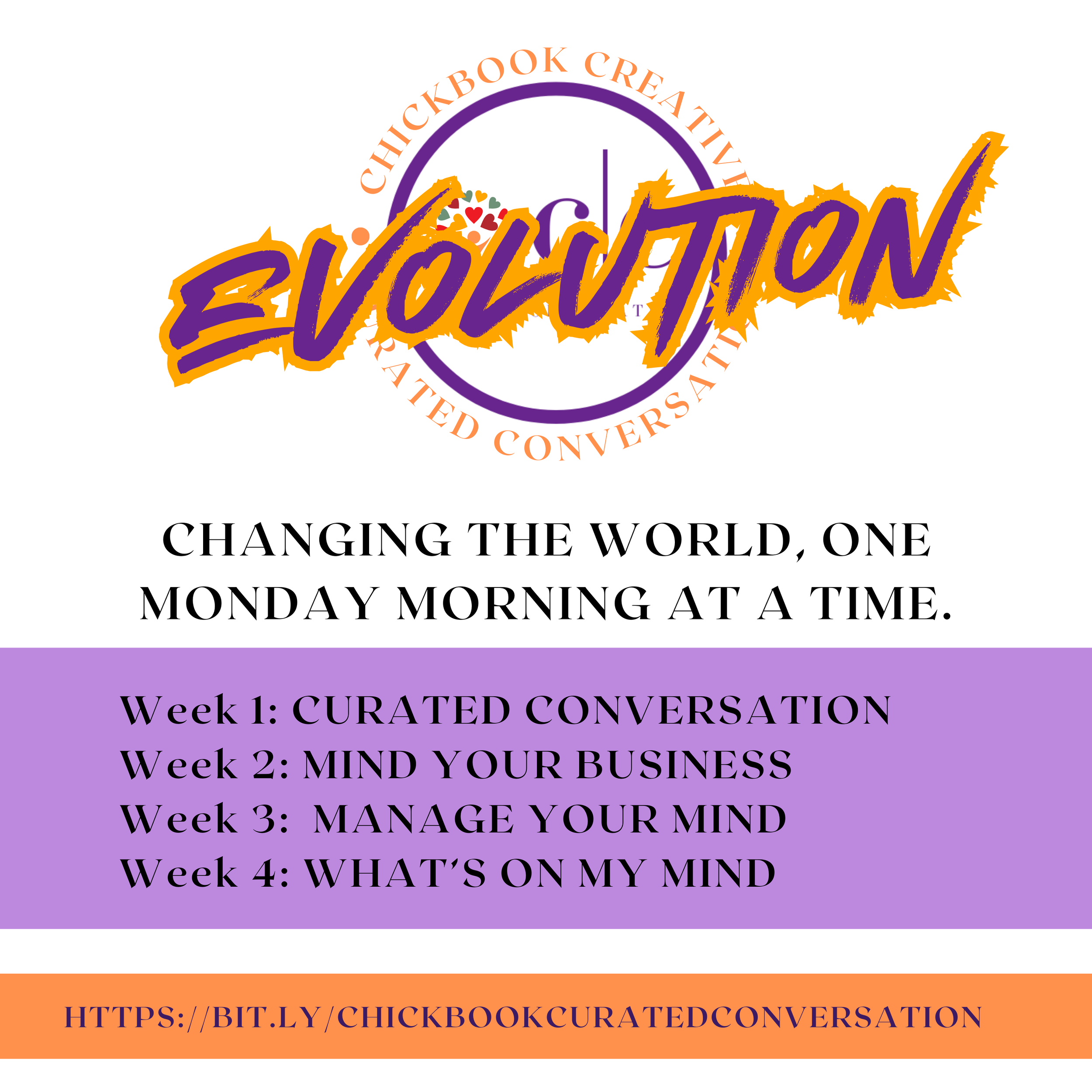
Curated Conversation
This August marks our 50th Curated Conversation topic! 241 weeks of showing up in community, not alone. It felt right that Interdependence is the topic that gets to carry that milestone.
Every Monday at 8am EST, Curated Conversation Evolution is a room full of creative entrepreneurial brains that get it. Bring the thing you've been handling alone.
August is our month on Interdependence. Your first month is free. Come find out what it feels like to be in the room where it's safe to say the thing out loud.
Listen if you want. Speak if you're ready. Stay if it feels like home.
Mondays at 8 a.m. EST. Start with coffee. Belonging included. 💜
Was this blog forwarded to you? Sign up!
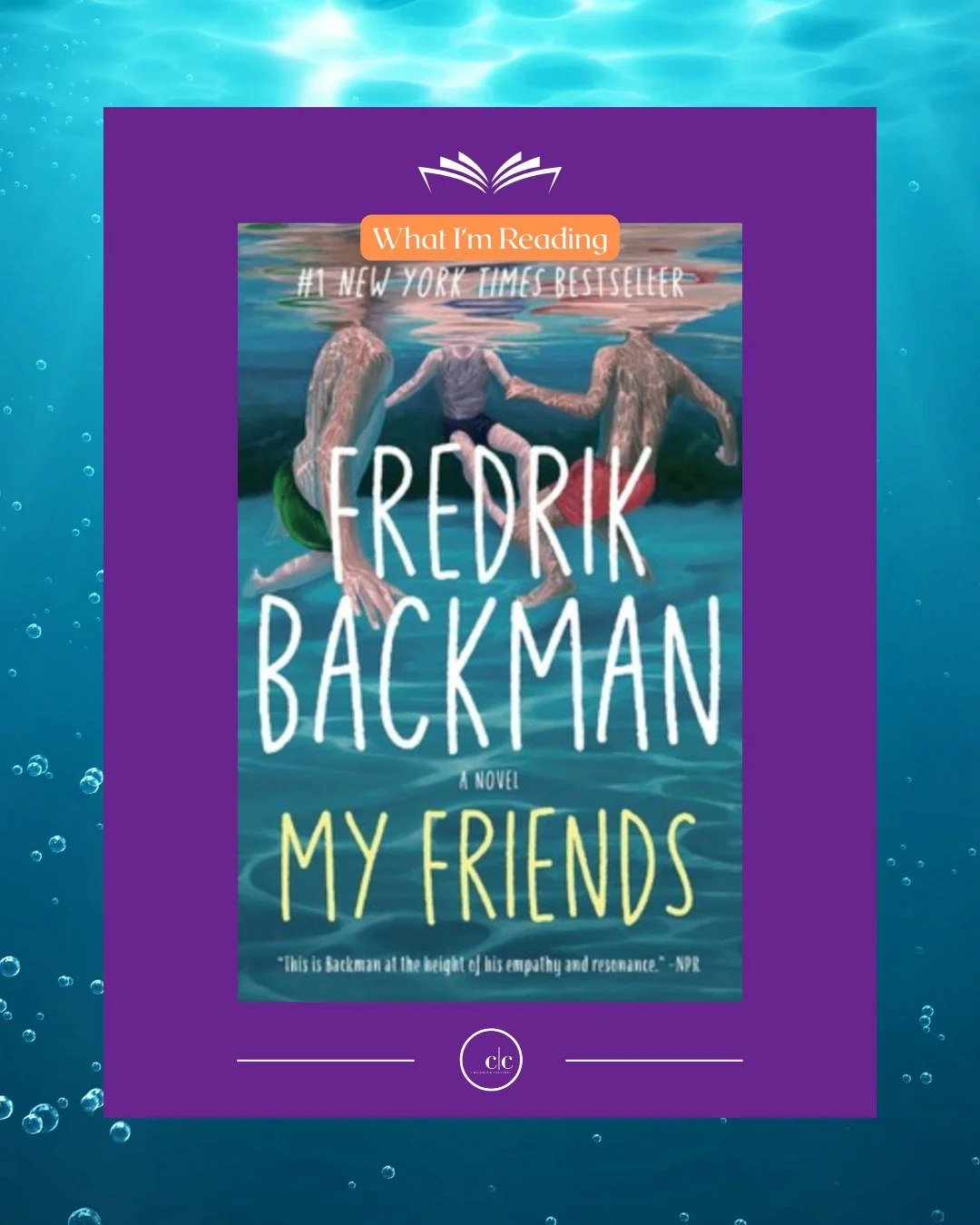
What I’m reading
Strong Female Character
by Fern Brady
Performing “normal” and what it costs.
Thank you very much, Instagram algorithm, for bringing Fern Brady’s book into my awareness. Yes, I did go to the link in her bio and purchased her book through the Independent Book Store in Edinburgh, Scotland. And, yes, I also needed the tote bag from The Portobello Bookshop to carry my new book around Massachusetts. (I’m proud of myself for only ordering those two things!)
What's Inspiring Me: unmasking as a business strategy, not just a personal one.
In other news…
Feeling #FOMO about Curated Conversations? Join us!