🧠 Weekly MindSweep No. 209 | Mind Your Business | Value
January 2026
Week 208: Curated Conversation: Value (4 years!)
*Week 209: Mind Your Business: Value
Week 210: Manage Your Mind: Value
Week 211: What’s On My Mind: Value
New to the Weekly MindSweep? Past issues live here.
Let’s Sweep The Brain!
🎬 Rather watch or listen instead of read? Now you can!
Subscribe to YouTube @chickbookcreative
In the MindSweep this week:
Weekly MindSweep: Past issues live here.
Jamie’s Second Brain Corner: Links to references & MindSweep Mapping
Collaboration: with Shannon Giordano and the MetroWest Chamber of Commerce (First Friday of every month)
My face and a link to schedule your free consultation.
From Accessibility to Sustainability: A Shift in Value
When I reentered the entrepreneurial space in 2020, I didn’t really question the rooms I was spending time in.
These spaces were full of bright, driven, and hard-working entrepreneurs. People shared strategies, pricing advice, and growth hacks. I quickly realized I don’t like the word hack. In heart-centered businesses, there are no shortcuts. We give our all.
In these spaces, people often talked about making things more accessible and visible by lowering barriers, meeting the market where it was, and being generous with knowledge and time.
It all sounded responsible. Even ethical.
What I didn’t realize at first was how much those rooms were shaping my own thinking about value.
When you spend time in places focused on hustle, fear, lack, and scarcity, you start to see those ideas as normal business behavior. You begin to think that lowering your prices is the quickest way to get a yes, and that offering discounts proves your worth. You start to believe that giving more away is the only way to be valued, even if it takes time.
Those rooms don’t attract bad people, but I’ve learned they attract misaligned ones.
People trained to look for discounts.
People who want free information but never hold the time, energy, or focus to put it into practice.
People who consume insight without practicing it.
And when you lower your pricing to meet them, everything changes.
The quality of the lead shifts.
The relationship shifts.
The work shifts.
You’re not just changing a number. You’re choosing a mindset.
What I see now, working with entrepreneurs every day
Now that I work with creative entrepreneurs every day, I can tell where the conversation will go by the time pricing comes up.
They’re describing their work – thoughtful, experienced, nuanced work - that doesn’t fit neatly into templates or calculators. They talk easily about who they help and why it matters. The words come smoothly, like they’ve practiced this part a thousand times.
Then there’s a pause.
Their voice changes. They start speaking faster and breathing more quickly. Sometimes there’s a deep sigh, as if their body already knows what’s coming.
The story shifts quietly from what they know to what they fear.
Pricing feels emotional and vulnerable.
Even after years or decades of experience, it’s uncomfortable for many to stand by the value of their work without downplaying it. For some, it even feels unsafe.
Sometimes there’s nervous laughter, as if humor might make things easier. Sometimes there’s shame from knowing the business isn’t earning enough to support the person or the business itself.
In creative service and product-based businesses, prices get lowered before anyone asks. Assumptions fill the silence:
They won’t pay.
It’s too much.
I don’t want to be rejected.
I don’t want to trigger someone else’s nervous system.
Often, it’s only when looking back that the real reason becomes clear. Charging more feels heavy with expectations, as if it demands perfection and leaves no space to be human.
So the overexplaining begins:
More context.
More justification.
More added value.
Even when clients say, “You’re undercharging me,” it doesn’t really sink in. There’s nowhere for that feedback to settle yet. And a familiar pattern emerges:
Everyone else comes first.
The business gets invested in before the person running it does
Collaborators are deeply respected and compensated
But that same care is rarely given to themselves.
Eventually, exhaustion shows up. Then the resentment.
It’s not because the work isn’t meaningful, but because it’s being asked to carry more than it should.
The resentment nobody wants to admit to. When you lower your price without reducing the scope, something breaks.
You overgive.
You overdeliver.
You bring full expertise into containers that were never designed to hold it.
And when the person you’re working with isn’t really listening, practicing, or applying what you share, you notice it. The exhaustion comes not from effort, but from misalignment.
Resentment builds quietly.
You start to pull back, not on purpose, but because it happens naturally. The quality of your work drops, the energy changes, and the whole experience suffers for both you and your client—no one benefits.
Not you.
Not your business.
Not your client.
This is what happens when pricing doesn’t match value and when you choose spaces out of fear rather than alignment.
Pricing is rarely about money.
What entrepreneurs rarely admit at first is that they’ve never set prices based on facts. Instead, they use assumptions, compare themselves to others, or pick what feels “reasonable,” “accessible,” or “safe.” Few have ever calculated what their work truly costs them.
And not just in hours.
Cost also includes:
cognitive load
emotional labor
preparation before the work begins
recovery time after it ends
years of experience earned the hard way
pattern recognition that saves others time, energy, attention, and money
When these costs are ignored, pricing becomes a way to manage our nerves instead of a real business strategy. We lower prices to feel better, add more value to ease our doubts, and overexplain to avoid imagined rejection.
We’re pricing for self-protection.
Over time, this self-protection turns into a habit, and that habit becomes an expectation.
This is how creative entrepreneurs end up working harder for less, resenting work they care about, and wondering why growth feels impossible even when money is coming in.
My own discomfort, practiced weekly
I’m still feeling the discomfort from the shift to charging for Curated Conversation. It’s not because it lacks value, but because charging brings up old habits. I feel pressure to prove myself and to deliver more just because money is involved. I know it’s still not priced to reflect the real cost of my time, energy, and attention each week. And, instead of rushing to fix it, I’ve been practicing something different. Actively rewiring my neural pathways.
Sitting in discomfort so I can take the next step toward sustainable business growth.
Every week, I show up through the discomfort, and in doing so, I’ve surrounded myself with people who are:
Intentionally here.
Listening deeply
Discerning how they want to show up
Practicing exactly what we are talking about.
They aren’t looking for free information to use and forget. They know what’s being offered comes from real experience. They show up ready to listen, learn, and put the ideas into practice, and that changes the whole environment.
And this leads to the most important thing I say this week.
You are not looking for clients.
You’re not just looking for clients, you’re looking for the right person. Someone who understands that what you offer isn’t just information—it’s experience, insight, and discernment. Sometimes, a single sentence can change their life or business because it comes from years of hard-earned lessons.
When you’re in the right room, value doesn’t need to be defended. It’s recognized.
People listen differently.
They practice differently.
They show up differently.
Then, pricing starts to feel less risky and more like a true reflection of your work.
Minding your business | Value
I know I said this last week, but it bears repeating.
We don’t decide what others value.
We never have.
What we do decide is:
What rooms we stand in.
What stories we reinforce.
What behaviors we tolerate.
What we continue to give away.
This week, I invite you to notice where you’ve been pricing from fear rather than from fact, where accessibility has come at the cost of sustainability, and where free offers have replaced clarity.
With tax season here, now is a good time to look at your numbers without judgment. See what actually came in, what went out, and what it really cost you to do your work.
When your pricing matches the real cost, you stop bracing yourself, stop second-guessing, and stop giving away parts of your work before you even start. Your business becomes a safer place to work.
From that sense of safety, you attract different clients.
Sustainable businesses aren’t built on discounts and constant hustle. They grow in spaces where people invest, apply what they learn, and grow—starting with themselves. Curated Conversation is where this work is happening. It’s a weekly practice of moving from reaction to clarity in both life and business.
This month we’re talking about the numbers, telling the truth about cost, and turning insight into action.
It’s time to build a business that truly supports you. Let value be something you stand on, not something you explain.
My questions for you this week:
Where in your business are you still choosing accessibility over sustainability, and what would need to change for that choice to actually support you long-term?
What is one room, container, or weekly practice you could commit to that would help you turn insight into action instead of just consuming more information?
Reply and share with me!
✨ You Belong Here. I can help.
If you haven’t taken a close look at your 2025 numbers yet, this is your moment.
Not to judge them. Not to justify them. To learn from them.
Your books show what really came in, what went out, and what it cost you in time, energy, attention, and money to run your business last year. These numbers aren’t a verdict. They’re just data, and data gives you choices.
If you want a safe, neutral place to review your 2025 books, talk through what you see, and turn the facts into clearer, more sustainable decisions for 2026, let’s connect. We look at the numbers calmly, without or without making them mean more than they do.
Learning your real numbers isn’t about fixing what’s wrong. It’s about building a business that can truly support you. If you want to stop guessing and start feeling clear about your numbers, I’m here to help.
Book a free consultation to learn how I can support you and your business.
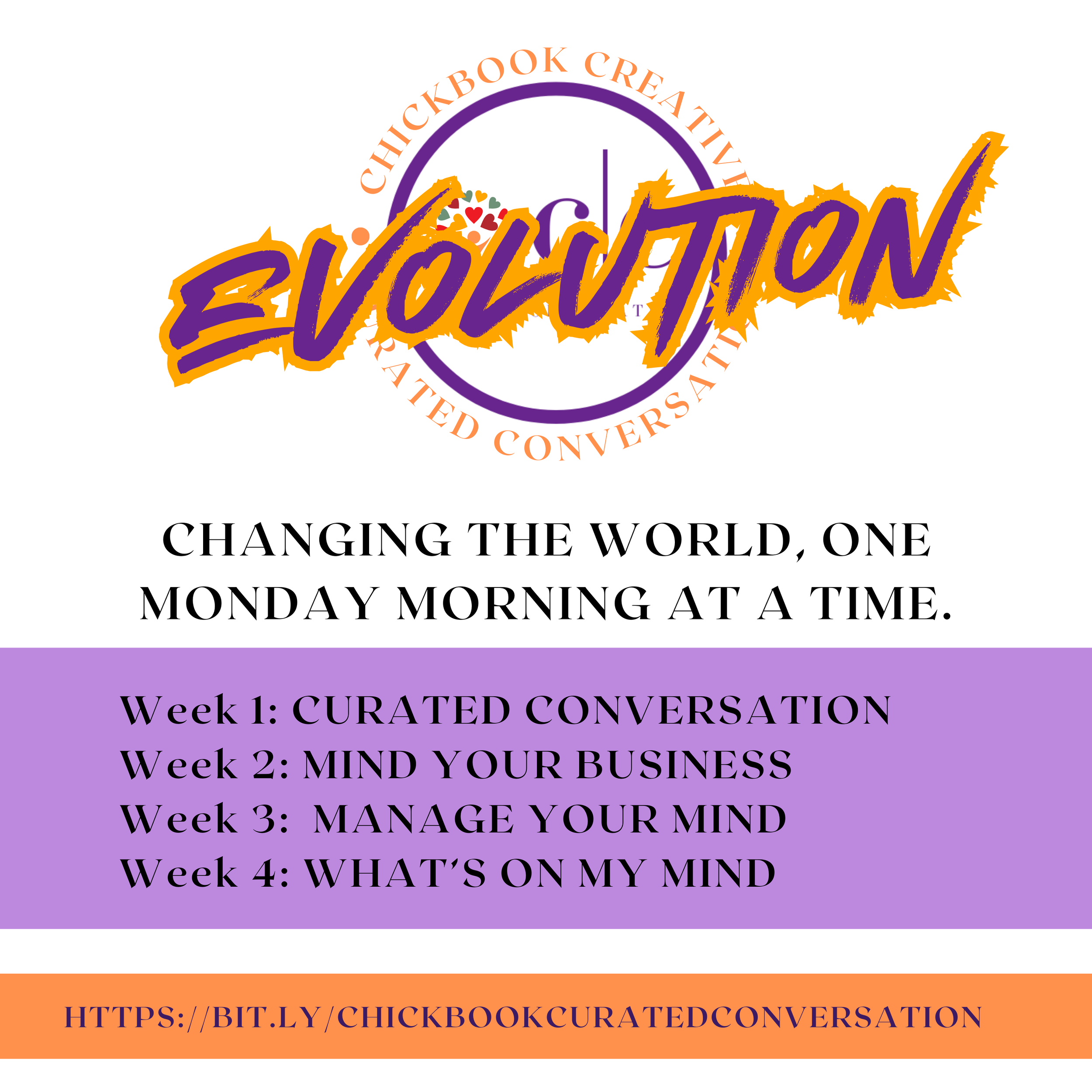
Curated Conversation
If this conversation sparked curiosity, resistance, relief, or a quiet “yes, this is it,” you don’t have to hold it alone.
Curated Conversation is a weekly, live space for thoughtful, heart-centered entrepreneurs to slow down, speak honestly, and explore topics like Value—without pressure to perform or prove.
We gather to listen, reflect, and make sense of what’s shaping our businesses and decisions together.
If you’ve never joined us, your first month is free. Come sit in the room. Listen if you want. Speak if you’re ready. Stay if it feels like home.
Mondays at 8 a.m.
Start with coffee.
Belonging included.
If you’ve never joined us, your first month is free. Come sit in the room. Listen if you want. Speak if you’re ready. Stay if it feels like home.
Mondays at 8 a.m.
Start with coffee.
Belonging included.
Was this blog forwarded to you? Sign up!
Jamie’s Second Brain Corner:
Words in bold within the Weekly MindSweep are all topics we’ve covered in Curated Conversation. You can dig into them here by searching for the word.
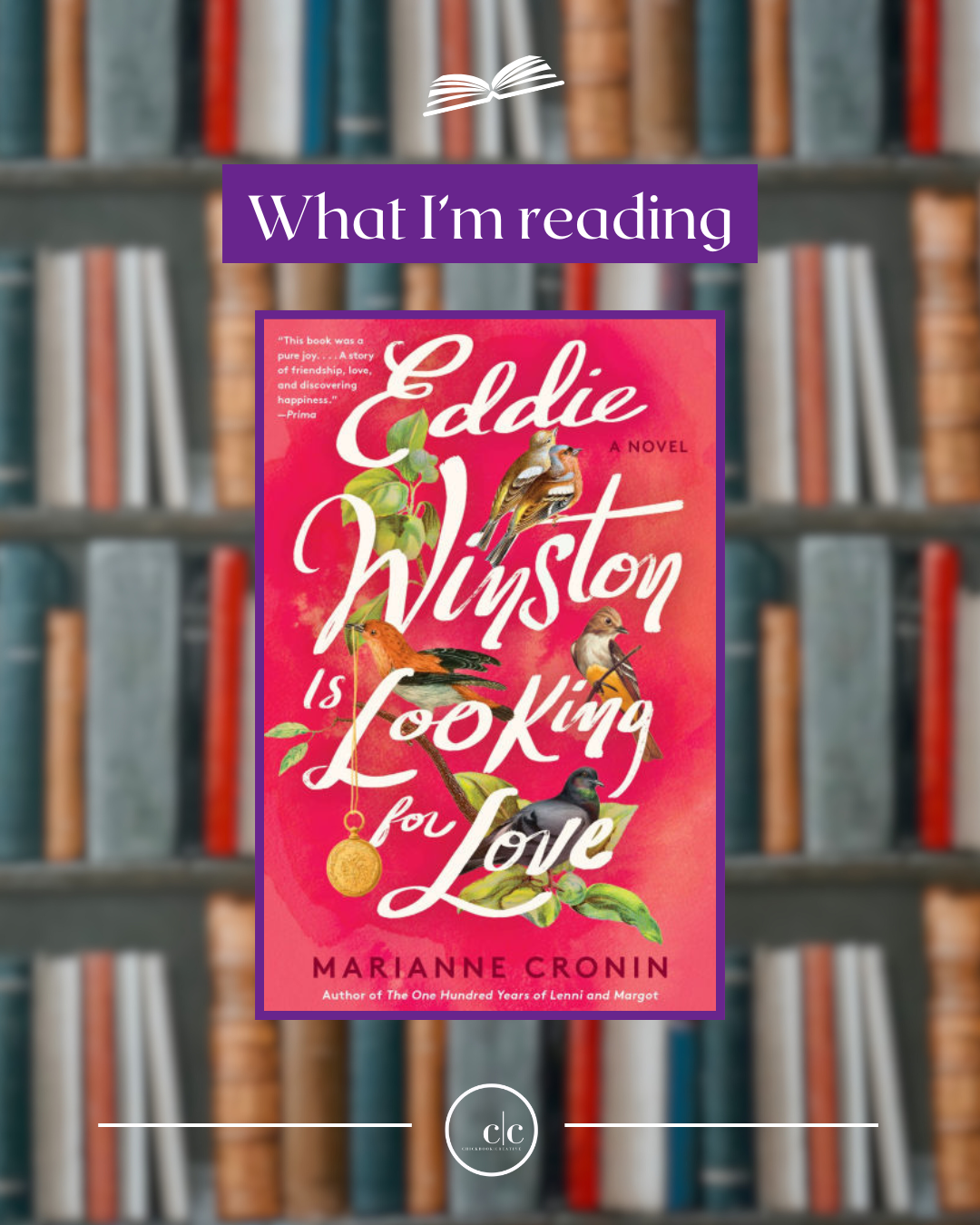
What I’m reading
Eddie Winston is Looking for Love.
Thank you, Liz Heichelbech, of Creative Incites, for this recommendation!
To know me is to know I have a sweet spot for the elderly. What a gift to live inside the brain of a 90 year old looking for his sweetheart. Bring the tissues.
Click on the image to read more.
Collaborations!

Join us Friday, February 6, 2025
Join Shannon and me at the MetroWest Chamber of Commerce with guest speaker Dana Cox of Humanitiv for Designing for Humans: How Understanding Your Customer Drives Real Business Growth. When you look at your business through your customer’s eyes, everything changes. In this session, Dana introduces practical, human-centered design tools to uncover customer needs, remove friction, map the full customer journey, and create clear, trust-building experiences that drive growth with tools you can start using right away in any business or nonprofit setting.
Free: Registration is required: https://bit.ly/MWCoC_Feb2026





In other news…
Feeling #FOMO about Curated Conversations? Join us!