🧠 Weekly MindSweep No. 210 | Manage Your Mind | Value
January 2026
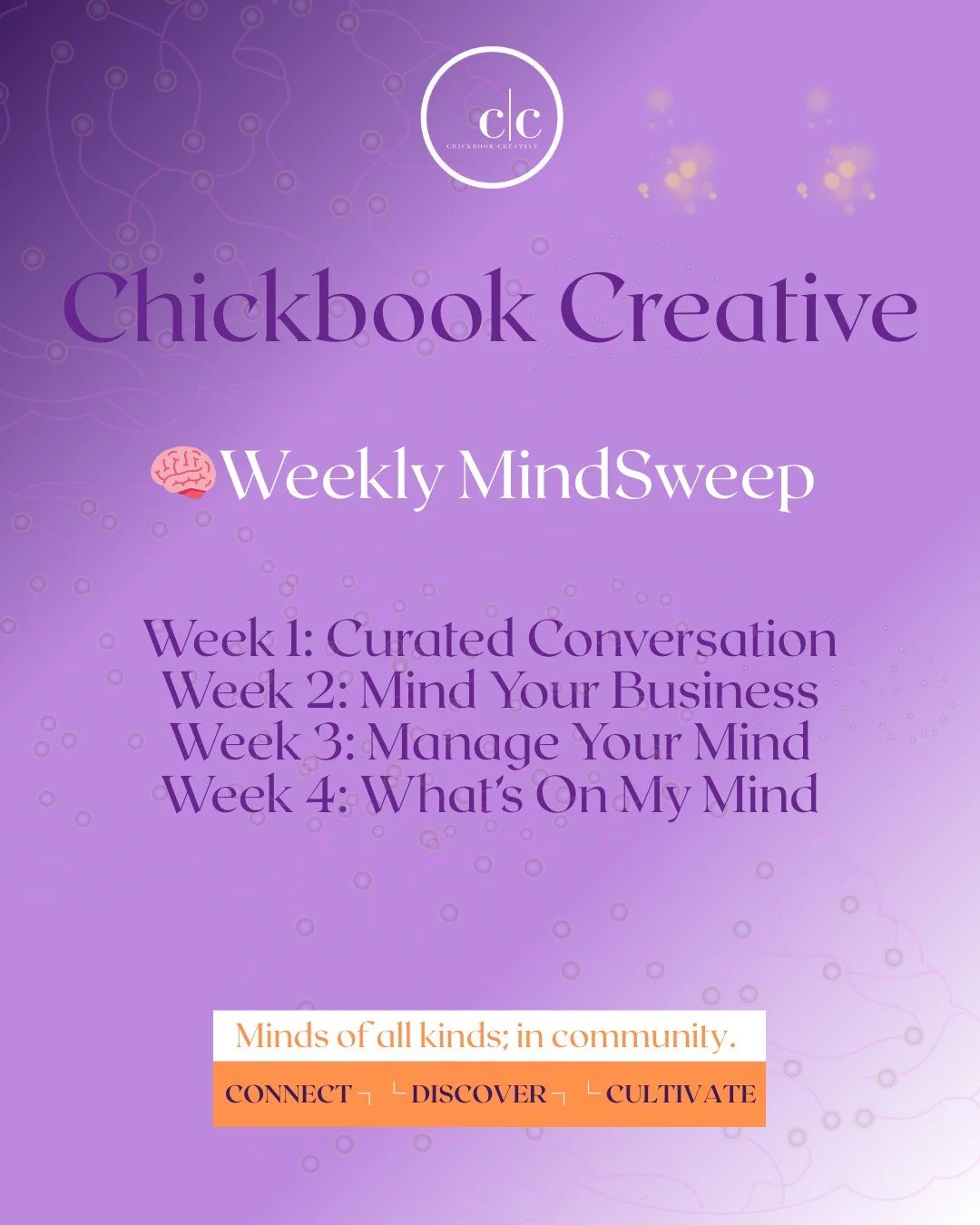
Week 208: Curated Conversation: Value (4 years!)
Week 209: Mind Your Business: Value
*Week 210: Manage Your Mind: Value
Week 211: What’s On My Mind: Value
New to the Weekly MindSweep? Past issues live here.
Let’s Sweep The Brain!
🎬 Rather watch or listen instead of read? Now you can!
Subscribe to YouTube @chickbookcreative
In the MindSweep this week:
Weekly MindSweep: Past issues live here.
Jamie’s Second Brain Corner: Links to references & MindSweep Mapping
Collaboration: with Shannon Giordano and the MetroWest Chamber of Commerce (First Friday of every month)
My face and a link to schedule your free consultation.
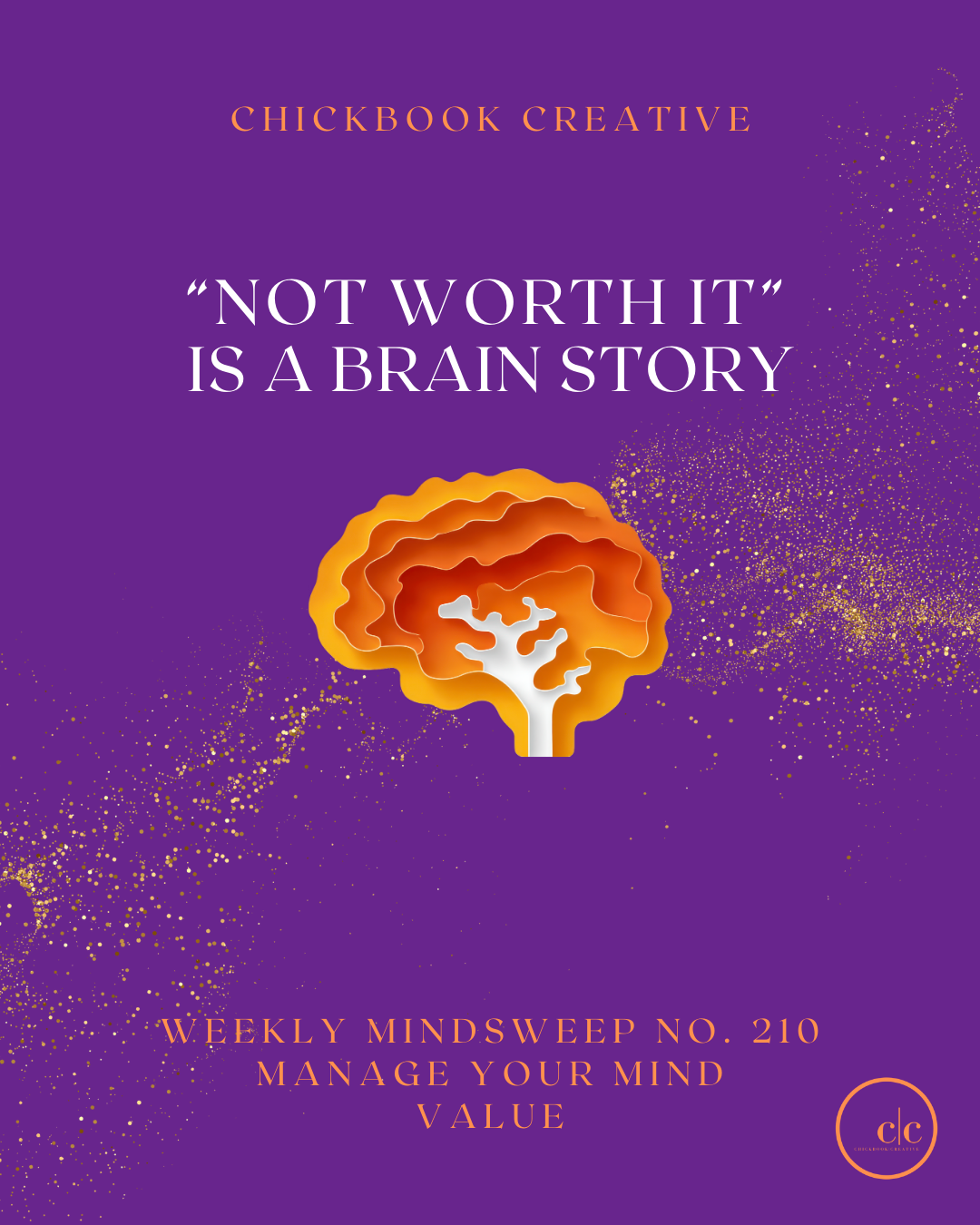
“Not Worth It” Is a Brain Story
Six weeks I lived inside an idea. Not dabbling or tinkering. Literally living there.
I could see the whole thing clearly in my mind: the arc, the transformation, and the relief it would bring to the right people. I built it like many creative entrepreneurs do, as a complete movie in my head before anything existed in the real world.
When I finally hit publish, I didn’t feel nervous. I felt ready. THIS is the thing my audience has been waiting for.
Then the numbers came in. Three sales.
Wait, what?!
And the audacity of the universe to not send me an email explaining what went wrong. There was just a quiet, empty moment where my body sensed something before my mind understood it.
And the first story that surfaced wasn’t generous. It wasn’t even remarkably accurate.
It was simple.
Welp, that wasn’t worth it.
The story your nervous system tells first.
Here’s what I’ve learned personally and professionally about value:
Value is not logical first.
Value is not a spreadsheet.
Value is not even conscious.
Value is a fast, super messy story your nervous system tells about one core question:
Is this worth my energy right now?
And the human brain loves to conserve energy.
For creative entrepreneurs, especially those with ADHD, that story is louder, more emotional, and much more focused on the present than the future.
When something works quickly, our whole body lights up.
When something takes time—or lands softly—we don’t just feel disappointed.
We feel misled.
And that’s where the stories start.
Because when my launch “only” brought in three sales, my brain didn’t interpret that as an early signal or neutral data.
It treated it as a warning.
What my brain did with “three.”
Before I could rationalize anything, my nervous system had already run the math.
First, my brain noticed something was off from what it expected. I had already given myself little hits of dopamine while building. Every moment spent imagining, refining, and perfecting brought a quiet sense of reward.
My brain started to expect a certain outcome because it felt so likely.
When reality didn’t match that expectation, my system flagged it as a threat not only to my business but also to my energy.
Then it tagged the whole project as high effort, low reward.
Six weeks of work followed by a quiet response gets remembered as, “That cost too much.” Our brains are great at holding onto what feels inefficient.
ADHD brains especially feel the immediate emotional impact and often overlook long-term possibilities. The disappointment of “this didn’t land” can easily drown out the rational truth that:
Many strong ideas don’t land loudly the first time.
So the next time I thought about promoting it again, something subtle happened.
I hesitated.
I reorganized instead.
I scrolled.
I suddenly found other things that felt more “worth doing.”
Not because I didn’t care.
But because, unconsciously, my nervous system quietly applied the brakes.
The learning I wish more entrepreneurs were taught
When we say, “This isn’t worth it,” we usually aren’t making a statement about the work. We’re revealing a momentary internal calculation that sounds internally more like “Given how risky, delayed, emotionally loaded, and painful this feels right now, my brain is voting, um, no.”
That vote feels authoritative because it arrives fast and confidently. But it isn’t the objective truth. It’s a snapshot. It’s a piece of a much larger puzzle.
And.
Your sense of value is not fixed. It’s learned.
Once we realize that our sense of value is learned, our brain can relearn it. The same parts of the brain that made that project feel “not worth it” can change. They update with experience.
This means you can train your brain to see that aligned work is valuable, even if the reward comes later.
[cough] sending consistent emails [cough]
How your brain actually calculates “worth it.”
Over time, I’ve come to understand value as a collaboration between three systems.
First, there’s dopamine and expectation. Dopamine doesn’t reward effort; it updates your brain’s predictions. Every result is compared to what you expected, and that shapes whether the path feels worth repeating.
Second, there’s time. ADHD brains especially tend to care less about the future. If a reward is unclear or far off, it actually feels less valuable, even if you know it’s important.
Third, there’s loss and how we frame it. We feel losses more deeply than gains. A “failed” experiment feels heavier than a small success, even if both teach us the same amount.
Put those together, and it becomes clear why so many creative entrepreneurs abandon good ideas too early, or double down on the wrong ones out of urgency.
Grounded practices: Internally retraining what feels valuable
So, how do we work with this?
Give your nervous system new evidence. And no, this is not about positive thinking. Together, let’s take a slow and steady approach to a new practice.
Break value into micro-wins.
Design work so completion happens often and visibly.
One email sent, one conversation started, one page finished.
Each small finish teaches your brain: this path pays off.
Pull the future closer.
Replace vague goals with near-term signals.
Not “grow my audience,” but “five replies” or “one real conversation this week.”
Shorter feedback loops reduce resistance to long-term work.
Reframe flops as information.
After a launch, ask what you learned about timing, language, or readiness.
Data lowers emotional cost, and emotional cost is what your brain remembers.
Use loss aversion intentionally.
Ask what you lose by not acting. Eg, learning, momentum, and compound clarity
Your brain responds more strongly to preventing loss than chasing gain.
Create real containers
Clear start, clear end, limited scope.
Having clear limits and structure can make something feel more valuable and help you focus, especially for creative brains.
What I know now.
Let’s go back to that launch and those three sales.
On my old wiring, my nervous system logged: High effort. Low return. Never again.
On rewired wiring: I now pause long enough to choose a different interpretation.
Three real humans said yes.
Three people trusted the promise enough to act.
Something sprouted, and it wasn't on my timeline. #Expectation
Instead of abandoning the offer, I chose a smaller next step. One conversation. One refinement. One more round of listening.
Same external result. Completely different internal learning.
Market-facing course correction (without abandoning yourself)
Many creative entrepreneurs get stuck trying to understand the market. I still believe we’re actually the ones creating the market.
When you’re hyperfocused, time stretches. Six weeks of work can feel like six months of identity. That makes low numbers feel personal.
Here’s how we can course-correct without collapsing our own sense of value.
Shift from ego metrics to signal metrics
Separate effort from fit
Define success before launching: “3–10 buyers means proof of life, not failure”
Talk to the yeses
Interview the people who bought
Listen for their words, hesitations, and motivations.
That language is where perceived value actually lives.
Test the wrapper
Most value is decided before someone even sees what you built.
Title, promise, friction, and emotional cost matter more than content depth. Remember, we don’t control what others value!
Right-size the ask
Trust often takes longer than excitement and forced urgency.
Smaller yeses build safety before bigger commitments. People need a taste of what you have to offer before they will buy the whole dozen!
Decide in advance not to quit too early.
Create a rule: this could look like three iterations before your judgment.
Change one variable at a time so the data can speak for itself.
The story we can consciously live by now.
From the inside, that launch felt like I had mispriced my time and worth. My nervous system read three sales as a bad bet. But experience and learning neuroscience has taught me something steadier.
Value isn’t revealed all at once.
It’s clarified through iteration.
The market rarely hands us a verdict. It whispers clues.
And managing your mind isn’t about silencing disappointment or forcing optimism. It’s about repeatedly teaching your nervous system this truth:
The most valuable thing in your business is not the big win.
It’s your willingness to stay in the conversation long enough for your internal sense of value and the market’s understanding to meet.
That isn’t hustle.
That’s discernment.
And it compounds quietly every time you choose not to disappear after the first data point.
My questions for you this week:
Where have you recently said “that wasn’t worth it” without realizing you were responding to emotion, not evidence?
If value is learned, not fixed, what would you want your brain to relearn next?
Reply and share with me!
✨ You Belong Here. I can help.
If you’re reading this, you probably know the feeling when your body quietly tells you something isn’t worth it. That moment can shape what you build, avoid, price, or leave behind.
This is exactly what I help with.
I work with creative, heart-centered entrepreneurs, many of whom have ADHD or think in unique ways. I help them separate data from self-worth, rethink what feels valuable, and build businesses that reward steady effort, not just bursts of energy.
Here’s what we explore together:
Where your mind might be holding you back
What your body has learned from past launches, pricing choices, or times when results were quieter than expected
How to rebuild trust in your work so that steady, long-term effort feels worthwhile
This isn’t about working harder or trying to fix yourself.
It’s about understanding how your mind makes decisions and shaping your business to fit how you naturally work.
If you’re ready to stop letting a single result change how you see your value, I’d love to connect.
Let’s start with a conversation.
There’s no pitch and no pressure. We’ll simply take a clear, thoughtful look at what’s going on beneath the surface and what it might take for your work to feel meaningful again. Book a free consultation to learn how I can support you and your business.
Curated Conversation
If this conversation sparked curiosity, resistance, relief, or a quiet “yes, this is it,” you don’t have to hold it alone.
Curated Conversation is a weekly, live space for thoughtful, heart-centered entrepreneurs to slow down, speak honestly, and explore topics like Value—without pressure to perform or prove.
We gather to listen, reflect, and make sense of what’s shaping our businesses and decisions together.
If you’ve never joined us, your first month is free. Come sit in the room. Listen if you want. Speak if you’re ready. Stay if it feels like home.
Mondays at 8 a.m.
Start with coffee.
Belonging included.
If you’ve never joined us, your first month is free. Come sit in the room. Listen if you want. Speak if you’re ready. Stay if it feels like home.
Mondays at 8 a.m.
Start with coffee.
Belonging included.
Was this blog forwarded to you? Sign up!
Jamie’s Second Brain Corner:
Words in bold within the Weekly MindSweep are all topics we’ve covered in Curated Conversation. You can dig into them here by searching for the word.

What I’m reading
Eddie Winston is Looking for Love.
Thank you, Liz Heichelbech, of Creative Incites, for this recommendation!
To know me is to know I have a sweet spot for the elderly. What a gift to live inside the brain of a 90 year old looking for his sweetheart. Bring the tissues.
Click on the image to read more.
Collaborations!

Join us Friday, February 6, 2025
Join Shannon and me at the MetroWest Chamber of Commerce with guest speaker Dana Cox of Humanitiv for Designing for Humans: How Understanding Your Customer Drives Real Business Growth. When you look at your business through your customer’s eyes, everything changes. In this session, Dana introduces practical, human-centered design tools to uncover customer needs, remove friction, map the full customer journey, and create clear, trust-building experiences that drive growth with tools you can start using right away in any business or nonprofit setting.
Free: Registration is required: https://bit.ly/MWCoC_Feb2026




In other news…
Feeling #FOMO about Curated Conversations? Join us!