🧠 Weekly MindSweep No. 211 | What’s On My Mind | Value
January 2026
Week 208: Curated Conversation: Value (4 years!)
Week 209: Mind Your Business: Value
Week 210: Manage Your Mind: Value
*Week 211: What’s On My Mind: Value
New to the Weekly MindSweep? Past issues live here.
Let’s Sweep The Brain!
🎬 Rather watch or listen instead of read? Now you can!
Subscribe to YouTube @chickbookcreative
In the MindSweep this week:
Weekly MindSweep: Past issues live here.
Jamie’s Second Brain Corner: Links to references & MindSweep Mapping
Collaboration: with Shannon Giordano and the MetroWest Chamber of Commerce (First Friday of every month)
My face and a link to schedule your free consultation.
Stop Guessing Your Worth
From Assumption to Alignment:
Rethinking Value
This month, we didn’t just visit the idea of value.
We moved in and made it our focus.
We didn’t turn value into a clever framework and move on. Instead, we let it interrupt our habits and ask uncomfortable questions. It followed us into spaces often overlooked: our calendars, our inboxes, our pricing, our spending, and into any place where we allocate our most valuable resources: time, energy, and attention.
We allowed it to fundamentally reshape our patterns of thought. #NeuralPathways
Dedicating an entire month to studying value changed my perspective in ways I didn’t anticipate.
Because value isn’t theoretical.
It’s behavioral. It shows up in our actions.
It shows up in what we protect.
And in what we tolerate.
It shows in what we rush or linger over.
And once you start really paying attention to it, you can’t unsee it.
Noticing Value as a Consumer
One of the first changes I noticed was in how I spend as a consumer.
It was about both what I buy and the reasons behind my choices.
Where do I spend without hesitation?
Where do I pause, overthink, or bargain with myself?
What feels like an easy yes, and what feels heavy, even if the cost is reasonable to me?
Some purchases feel right, and I don’t regret or question them. I use what I bought, enjoy it, and would do it again.
Others feel sticky. I noticed resistance by looking for discounts, delaying, or trying to justify. And sometimes when I buy, I’d carry a quiet tension with me afterward.
Just noticing alone was revealing.
Our resistance while buying reveals what we truly value, beyond the price.
That resistance isn’t really about the price. It’s about whether the value feels real, embodied, and trustworthy.
Seeing the Mirror as a Creative Entrepreneur
And then, of course, the mirror appeared.
Because how we spend as consumers often reflects how we charge as creative entrepreneurs.
As I paid attention to my own spending patterns, I started noticing the same dynamics in my business:
Where do I confidently stand behind my pricing?
Where do I explain too much?
Where do I emotionally discount my work before anyone asks?
Where do I give more than I planned and then quietly resent it?
These moments aren’t moral failures; they’re just information.
They show us where our sense of value is solid or tangled with old stories, fear, or the need for validation.
Stories like:
“This is what the market will bear.”
“People won’t pay for that.”
“I should offer more to make it worth it.”
“Others charge less, so I probably should too.”
None of those statements are facts. They’re assumptions.
Assumptions aren’t a stable base for sustainable businesses.
Building your business on facts, not assumptions, ensures your business delivers enduring value.
Sitting in Community While Doing the Work
One of the greatest honors of this month has been sitting in the Evolution of Curated Conversation alongside other creative, trailblazing entrepreneurs who were willing to honestly examine value. No bravado, no shortcuts, and without pretending it’s easy.
Together, we looked at where our time, energy, and attention really go, not just where we think they go.
We talked about what we give away for free, and why we do it. We asked hard questions:
Is this generosity or avoidance?
Is this service or self-erasure?
Is this aligned or inherited from hustle culture?
We didn’t rush to find answers. We slowed down to notice the patterns. Then we did something many entrepreneurs avoid because it can be uncomfortable: we looked at the numbers.
Not imagined or aspirational numbers. Not “if everything works out” numbers.
Factual numbers.
Time audits. Financial audits. Capacity audits.
Clarity doesn’t come from hope or fear. Clarity comes from honestly facing facts about your business. Clarity is a key principle for growth.
Facing reality with honesty and compassion is incredibly grounding.
Replacing Fear-Based Math with Facts
Many creative entrepreneurs make decisions based on math that isn’t real. I hear statements like:
“I worked nonstop this year, but I don’t know where the money went.”
“I feel busy all the time, but I’m not sure what’s actually moving the needle.”
“I can’t raise my prices because people won’t pay.”
But when we slow down and look closely, we often discover:
We worked far more hours than we accounted for.
We undervalued entire categories of labor.
We took on costs—emotional, energetic, and relational—that never showed up in our pricing.
Fear fills in the gaps when facts are missing. But when we know the facts, fear loses its power. Facts replace fear and enable grounded decisions.
This month, I saw people adjust—not by getting louder or more forceful, but by becoming more grounded. They stood more confidently in what they offer, let go of what no longer fit, and took back energy lost to old habits.
All of this came from one simple but powerful act: being honest about their numbers.
Confidence That Doesn’t Need to Perform
One of the most beautiful outcomes of this work has been the kind of confidence that emerged. It wasn’t dopamine, hype-driven confidence, or performative certainty. But rather a steadier, quieter confidence. the kind that doesn’t need to prove itself.
When someone understands:
what they offer,
what it costs them to offer it,
and how it genuinely helps others,
They stop negotiating against themselves.
They don’t have to over-explain, over-deliver, or prove their worth ahead of time. They can simply show up and do the work.
And that kind of confidence is contagious.
Alignment, not performance, creates lasting confidence and inspiration.
A Look Back: Weeks 208, 209, and 210
This month unfolded in layers.
Weekly MindSweep No. 208 invited us to explore where our understanding of value came from in the first place. Family systems. Cultural norms. Economic structures. Early experiences that quietly taught us what was “worth it” and what wasn’t.
Many of those lessons were absorbed long before we had language for them and long before we had agency to question them.
Weekly MindSweep No. 209 shifted our focus outward, to the spaces we spend time in, the communities we learn from, and the conversations that make behaviors like discounting, over-giving, or always chasing 'more' seem normal.
Because the rooms we sit in shape the mirrors we look into.
Weekly MindSweep No. 210 turned inward again, exploring what happens when our value isn’t recognized as we hoped—when something we put our heart into doesn’t land, sell, or get noticed.
Those moments can be destabilizing, but only if we mistake outcomes for identity.
This month wasn’t about avoiding disappointment. It was about understanding it more clearly.
Clarity about disappointment builds resilience and self-understanding.
Being the Change in the Market
That brings me to what’s on my mind now.
If we want the market to change, we have to change how we show up in it.
We can’t wait for permission or look for outside approval. We need to value ourselves in real, practical, and consistent ways first.
That means:
Respecting our time instead of stretching it too thin.
Setting our prices based on experience, not on insecurity.
Letting our work speak for itself without excessive explanation.
Trusting the facts in front of us more than the fears in our minds.
Valuing yourself isn’t selfish. It makes your work sustainable, and that’s what lets meaningful work last for years, not just for a workshop, launch, or new offer.
Self-value underpins sustainable, lasting impact.
Alignment Over Answers
This month didn’t give me a tidy set of answers. It gave me a sense of alignment.
Alignment between what I say I value and how I actually live.
Alignment between my generosity and the capacity of what I can actually give.
Alignment between the work I’m meant to do and how I support myself while doing it.
I’m learning that alignment is one of the clearest signs of real value. When something is aligned, it doesn’t need constant effort. It just works.
That’s what I’ll take with me from this month.
Alignment is essential for meaningful, sustainable work.
It's not about having a formula or rulebook. It's the willingness to tell the truth about what matters and building from there that shapes lasting, meaningful work.
That's the real measure of value I want to hold onto—and I hope you will, too.
My questions for you this week:
What did you notice this month about how you spend your time, energy, or attention that surprised you?
What numbers in your business (time, revenue, capacity) have you been avoiding, and what might change if you looked at them honestly?
Reply and share with me!
✨ You Belong Here. I can help.
You know your numbers deserve a gentler, clearer review, and you don’t have to face that by yourself.
This is how I support creative entrepreneurs.
We take our time.
We collect the facts together.
We review the real numbers together: time, capacity, energy, and money, all without judgment or rushing.
From there, we make informed, lasting choices that truly fit your life and your business.
We don’t make decisions out of fear.
We don’t just follow what the “market” says.
Instead, we focus on what’s real for you.
If you want a safe, thoughtful space to gain clarity, I’d be happy to work with you.
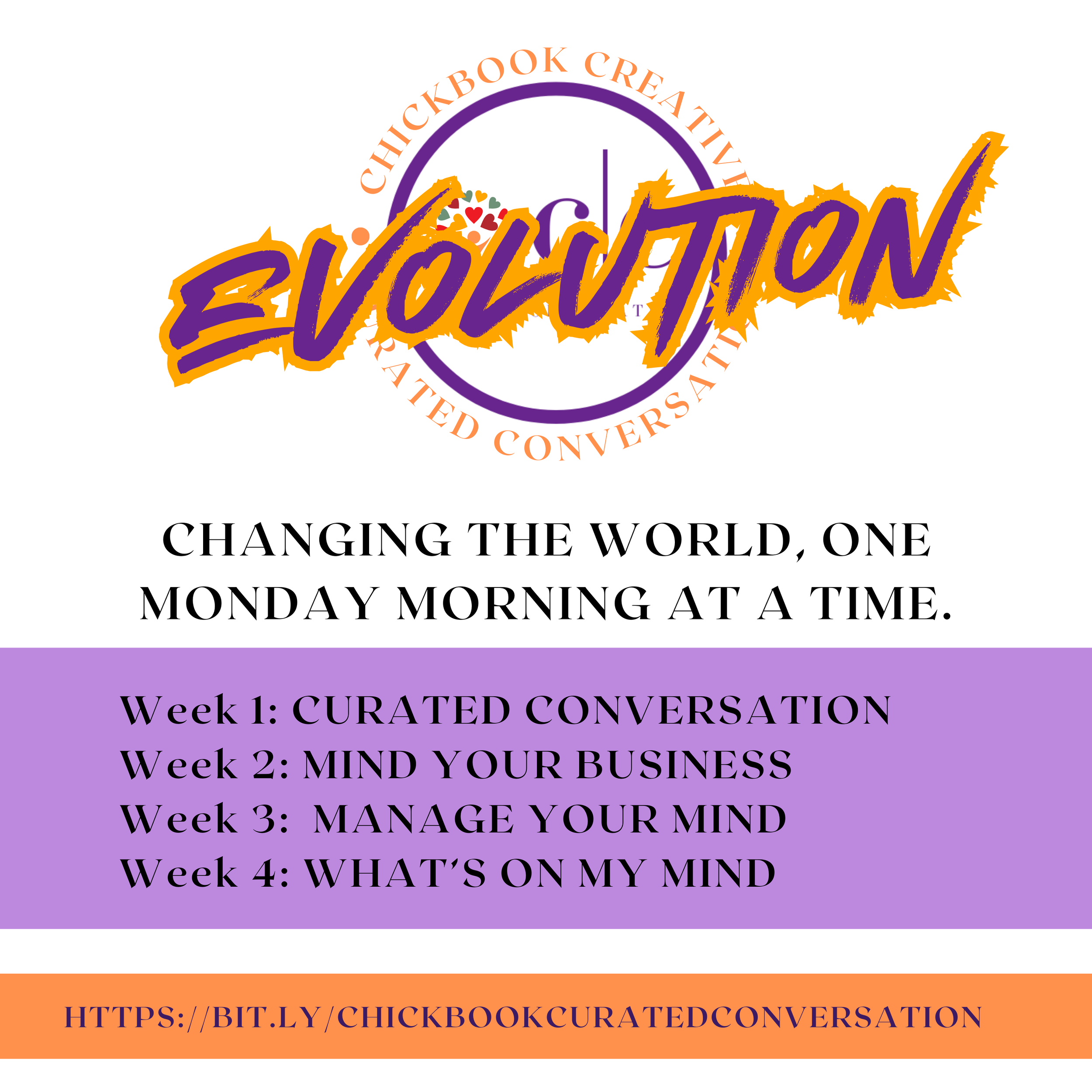
Curated Conversation
If this conversation sparked curiosity, resistance, relief, or a quiet “yes, this is it,” you don’t have to hold it alone.
Curated Conversation is a weekly, live space for thoughtful, heart-centered entrepreneurs to slow down, speak honestly, and explore topics like Value—without pressure to perform or prove.
We gather to listen, reflect, and make sense of what’s shaping our businesses and decisions together.
If you’ve never joined us, your first month is free. Come sit in the room. Listen if you want. Speak if you’re ready. Stay if it feels like home.
Mondays at 8 a.m.
Start with coffee.
Belonging included.
If you’ve never joined us, your first month is free. Come sit in the room. Listen if you want. Speak if you’re ready. Stay if it feels like home.
Mondays at 8 a.m.
Start with coffee.
Belonging included.
Was this blog forwarded to you? Sign up!
Jamie’s Second Brain Corner:
Words in bold within the Weekly MindSweep are all topics we’ve covered in Curated Conversation. You can dig into them here by searching for the word.
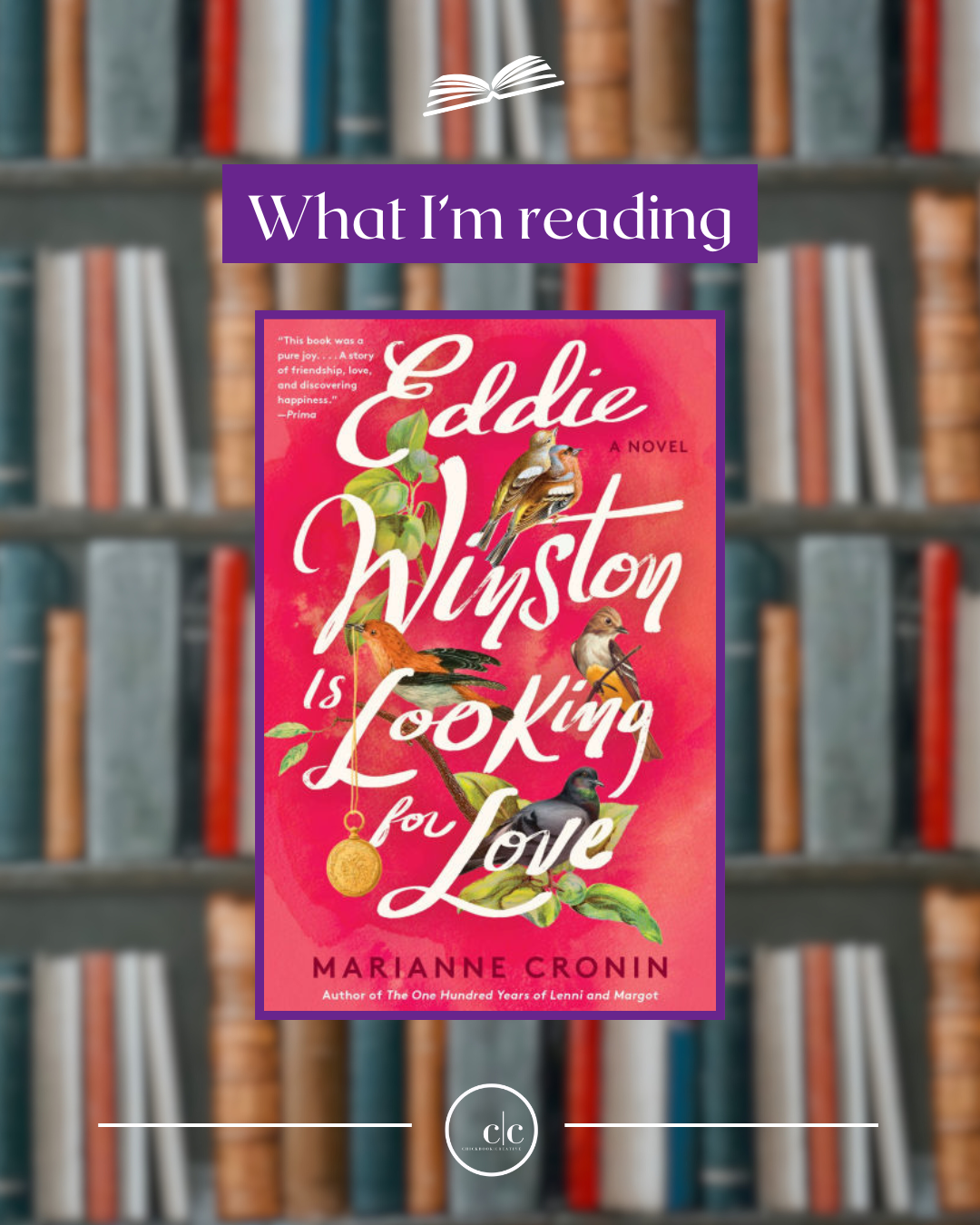
What I’m reading
Eddie Winston is Looking for Love.
Thank you, Liz Heichelbech, of Creative Incites, for this recommendation!
To know me is to know I have a sweet spot for the elderly. What a gift to live inside the brain of a 90 year old looking for his sweetheart. Bring the tissues.
Click on the image to read more.
Collaborations!

Join us Friday, February 6, 2025
Join Shannon and me at the MetroWest Chamber of Commerce with guest speaker Dana Cox of Humanitiv for Designing for Humans: How Understanding Your Customer Drives Real Business Growth. When you look at your business through your customer’s eyes, everything changes. In this session, Dana introduces practical, human-centered design tools to uncover customer needs, remove friction, map the full customer journey, and create clear, trust-building experiences that drive growth with tools you can start using right away in any business or nonprofit setting.
Free: Registration is required: https://bit.ly/MWCoC_Feb2026




In other news…
Feeling #FOMO about Curated Conversations? Join us!